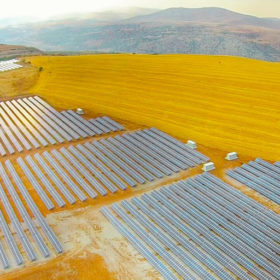
Trina bags 123 MW order from Ukraine
The Chinese module manufacturer will supply its panels for a huge solar project under development in the Dnipropetrovsk region, in southeastern Ukraine.
Tunisia postpones deadline for 70 MW solar tender, again
The country’s second 70 MW procurement – for solar projects up to 10 MW in size – was launched in May. The Tunisian government had already extended the deadline for the tender in August.

Decentralized solar-plus-storage would fire sub-Saharan Africa
According to a UC Berkeley study, the falling costs of storage technologies will make it possible for Sub-Saharan countries to rely on decentralized systems based mainly on solar-plus-storage, bringing access to electricity to more than 600 million people.
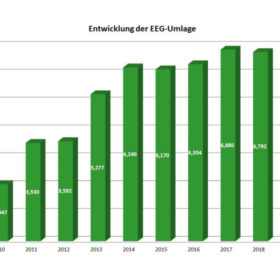
Germany’s EEG levy falls to €0.06405 in 2019
It is the second decline in a row. Germany’s TSOs base their calculations on the 6 GW expansion for solar and wind expected for the coming year. The surplus on the EEG account, which was included in the calculations, was €3.65 billion.

Germany: Tendered PV projects need no public subsidy in August
Marking a historic moment in the German renewable energy sector, no public incentive was paid in August for PV installations up to 10 MW and selected under the country’s tender mechanism. This was due to the fact that market prices were higher than the price including the feed-in premium tariff, awarded in the tender.
Finland’s 2017 PV market grows by over 100%
Overall, the country’s cumulative installed solar power has reached 80.4 MW, with last year’s PV additions totaling around 43 MW. More growth, mainly fueled by solar rebates and tax credits, is expected to be seen this year.
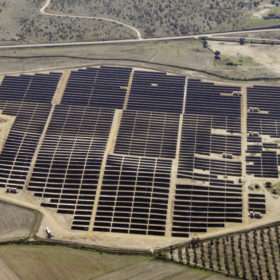
The weekend read: The MIP comes to an end
On August 21, the majority of EU member states rejected the request for the initiation of expiry reviews with regards to the antidumping and anti-subsidy measures for crystalline solar PV modules and cells originated in or consigned from the People’s Republic of China. As such, the undertaking on the minimum import price (MIP) expired on September 3, after almost five years in place. Here, Edurne Zoco, Research Director at IHS Markit looks at the changes this will likely bring to Europe’s PV market.

Report eyes alternative battery technologies due to socio-ecological concerns
Lead, sulphuric-acid, nickel, cobalt and rare earth metals are highly toxic and have adverse impacts on the environment and the societies in which they are mined. As the EU is looking to become a world leader in battery production, a report considers new battery technologies – such as sodium-ion – which would have less negative impacts.
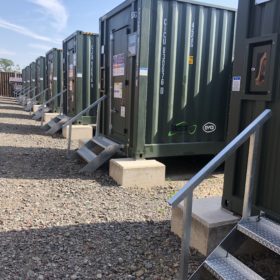
France reveals winners of tender for large-scale storage in Corsica and overseas territories
Eleven storage projects with a power rating of 50 MW and storage capacity of 54 MWh were selected by the French Energy Regulatory Commission through the tender. One will be in Corsica, while Guadeloupe and Guiana will each have three projects. Martinique and La Réunion will each host two.
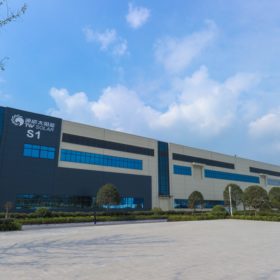
China’s Tongwei ramping up solar research and development
Heterojunction and TOPcon cell technologies being explored by Hefei-based cell and module maker. The Chinese giant is also preparing to fly in the face of predictions the big players will curtail plans to expand production after this year’s policy developments in their homeland.
