
Japan auctions 197 MW in second PV tender
The Japanese Government has wrapped up its second of three planned solar auctions, with nine companies winning the rights to build a total of 196.96 MW of commercial PV capacity.
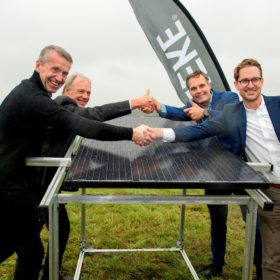
Construction begins on Sweden’s largest PV plant
The 5.5 MW facility was built by power company Göteborg Energi. The solar plant, in Säve, near Gothenburg, is intended to increase the utility’s generation capacity from renewable sources.
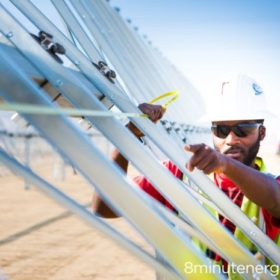
US southeastern states take the lead in utility-scale solar as interconnection queues swell to 188 GW (w/charts)
As a further sign that solar is going mainstream across the United States, a new report by Lawrence Berkeley National Labs finds that southeastern states hosted 40% of the utility-scale solar installed nationally in 2017. Interconnection queues have swelled to 188.5 GW of utility solar capacity, eight times more than installed capacity

Denmark issues tender for solar projects up to 1 MW
Through the exercise, the Danish Energy Agency will allocate around 35 MW of PV capacity. The $16.7m tender was originally scheduled for last year.
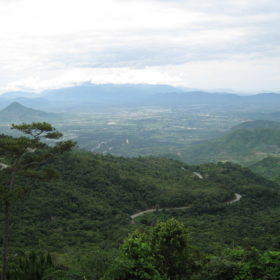
Vietnam extends provincial FiT scheme – with caveats
The government has extended the payment system in Ninh Thuan by 12 months. But with a 2 GW cap and 1.9 GW in place already, new entrants may have to move fast.

Zorlu Energy plans 50 MW solar project in Kazakhstan
The Turkish company has signed a framework agreement with the Kazakh Ministry of Energy and with the Turkestan district local authority for the large-scale project, which will be in the southernmost, sunniest part of the country.
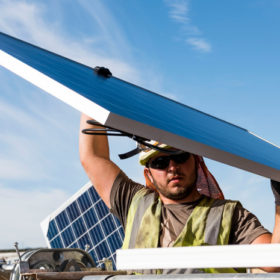
US solar market slumps during second quarter
The impact of Section 201 tariffs is cited in a 9% year-over-year fall in installation volume during Q2. However, Wood Mackenzie and SEIA also show massive utility-scale procurement, which is expected to lead to a boom in the second half of the year.
Low demand driving consolidation
With the release of second quarter financial results, the rankings of global module shipments in the first half of the year can be confirmed. JinkoSolar shipped 4.8 GW to take first place in this period.
Suriname to pre-qualify contractors for three MW-sized PV projects
The process will be conducted by the Caribbean Development Bank for the government of Suriname with $33m of public funding making up the balance from a $65m line of financing provided by the bank.

Hungary to see record PV growth in 2018
The Eastern European country is expected to see between 300 and 400 MW of PV capacity deployed this year. This growth will be primarily driven by the FIT program, which closed in mid-2016. Net metered PV installations up to 50 kW represent another key market driver, while C&I projects between 50 kW to 500 kW have ground to a halt.
