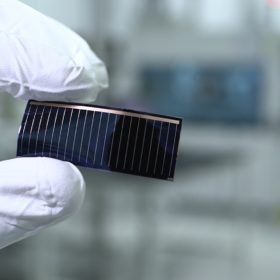
Audi, Hanergy unit to jointly develop PV for vehicles
German automaker Audi and California-based Alta Devices — a wholly owned subsidiary of troubled Chinese PV group Hanergy Thin Film Power (HTF) — have agreed to collaborate on thin-film solar research, with plans to exhibit a PV-integrated Audi prototype vehicle by the end of this year.
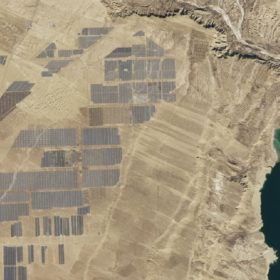
AECEA: China installations to surpass 40 GW in 2017
Based on new data from China’s National Energy Administration (NEA), Asia Europe Clean Energy Associates (AECEA) has raised its forecast for PV installations in China for 2017. AECEA now expects to see 40-45 GW installed in China before the year end.
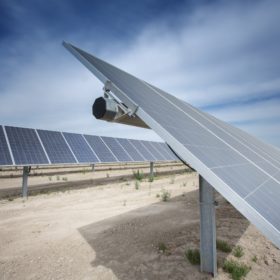
IRENA: Renewable energy can meet a quarter of India’s energy demand
As India’s energy needs are rising fast, the increased use of renewables in 2030 could save the economy 12 times the installation costs, when reduced environmental and health damage are taken into account, shows International Renewable Energy Agency’s roadmap to 2030, ranking solar as the country’s second largest source of renewable energy.

Bali’s PV potential shines in ADB mapping study
The island of Bali could produce as much as 115,371.9 GWh of electricity per year — far above its projected requirement of just 4,992.7 GWh per year by 2019 — and solar offers the greatest potential for future development, according to a new report by the Asian Development Bank (ADB).
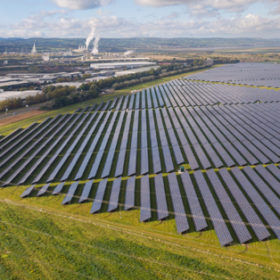
Foresight Solar Fund to pursue international strategy
The Foresight Solar Fund, an investment group with a 470 MW portfolio of solar projects in the UK, published financial reports for the first half of 2016 this week. Reporting after tax profits of GBP 11.5 million ($15 million) for the period up to 30th June, the group also announced plans to expand and acquire projects in new markets outside of the UK.
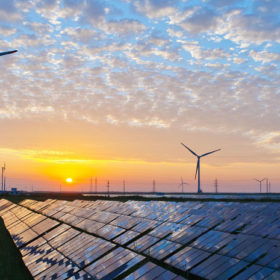
Staying below 2 degrees is “possible and practical” says RMI
The Rocky Mountain Institute’s new report Positive Disruption describes pathways for the global economy to mitigate serious global warming through accelerated adoption of renewable energy, the transformation of our energy and transportation system, and improved management of agriculture, forestry, and other land-uses. Staying below two degrees Celsius of warming is not just possible the report argues but practical given the accelerating declines in the cost of renewable energy.
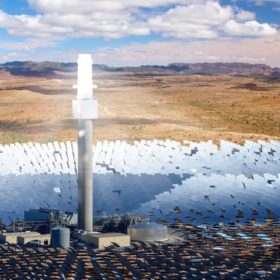
South Australia: 150 MW CSP plant to supply government’s power needs
Only a month after signing a deal with Tesla for the world’s largest lithium-ion storage project, the South Australian government has inked a generation project agreement with U.S. firm Solar Reserve for a massive solar thermal plant project, touted as the world’s biggest.
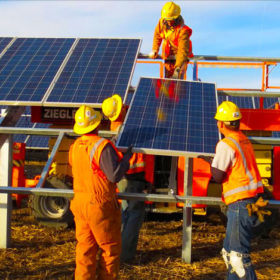
Uncertainty in 2018
As revealed in testimony against proposed trade action yesterday, the U.S. International Trade Commission’s Section 201 investigation is already having effects.

Puerto Rico plans to add 240 MW of solar by June 2019
The new PV capacity will be part of a plan to add 1.5 GW of new generation capacity and to address the state of emergency of the country’s electricity system.

U.S. legislators pressure ITC to reject trade petition
A bipartisan group of congressmen cite the possibility of devastating job losses as a reason to reject the Suniva/SolarWorld Section 201 trade case, one day before the commission hears testimony.
