Chinese companies lead global solar developer rankings
State Power Investment Corporation (SPIC) and GCL New Energy have taken the top spots for installed capacity, but Canadian Solar and First Solar are showing impressive pipelines.
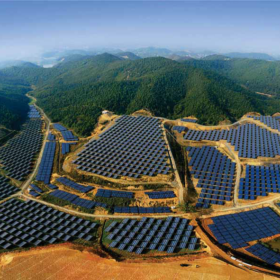
AECEA: Solar to overtake wind in China
A new report from the Asia Europe Clean Energy Associates (AECEA) expects solar to overtake wind energy in 2018 as China’s third largest source of power generation. AECEA is calling 2018 a ‘transition year’ for PV in China, as new regulations reshape the market, which is still expected to reach 250 GW installed capacity by the end of 2020.
IEEFA identifies nine markets pushing boundaries of variable renewables integration
Latest report by IEEFA showcases nine case studies among the world’s leading states by wind and solar market share, which can serve as an example for other countries on their energy transition pathways.

Heineken unveils strategy to increase renewables to 70% by 2030
The Dutch brewer unveils its “drop the C” program for renewable energy. The campaign aims at growing its share of renewable thermal energy and electricity in production from the current level of 14% to 70% by 2030.

GET FiT scheme launched in Zambia after successful run in Uganda
Through a partnership between German investment bank, KfW and the Zambian Ministry of energy, the GET FiT scheme has entered its first round, with a tender of up to 100 MW.
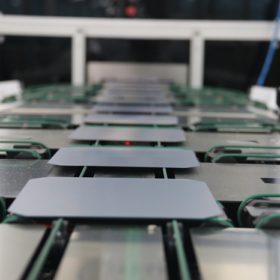
Analysis: Longi mono wafer expansion plans could yield H2 oversupply
Independent solar analyst, Corrine Lin believes that Longi’s plans to triple monocrystalline wafer production capacity to 45 GW by 2020 could trigger an oversupply problem in the second half of this year.
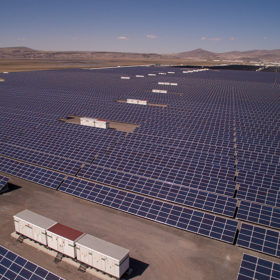
Europe added 8.61 GW of solar in 2017 with Turkey taking top spot
Annual growth of 28% on 2016’s performance points to promising future as Turkey’s 1.79 GW saw the nation overtake Germany as Europe’s most dynamic solar market. Former shining star, the U.K. slinks away from top table after shrinking 54%.
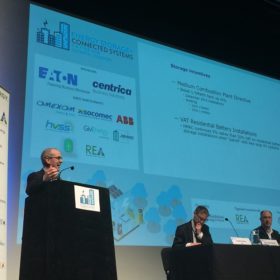
Waiting for the World Bank’s Scaling Solar and Storage program
Expectation is rising that the World Bank’s Scaling Solar program will soon expand to include energy storage. A presentation by global law firm, Eversheds Sutherland this week in London added further weight to this.

ABB to build Latin America’s first digital substation alongside new 156 MW solar farm, publishes 2017 financials
The Swiss-headquartered power electronics firm will install a 230 kV digitally enable substation and connection bay at Brazil’s Juazeiro II substation, which will eventually deliver power from a 156 MW solar plant. 2017 full year financials reveal transitional year for firm.
EU, China request consultation with US over solar tariffs, WTO filing shows
Following the introduction of 30% graduated tariffs on imported solar modules into the U.S., the European Union and China have joined South Korea and Taiwan in filing a complaint with the World Trade Organization.
