
Germany: several Chinese PV manufacturers face legal action for circumventing duties
According to media reports, several Chinese solar module manufacturers will face legal actions for illegal trade of PV products in Germany. For one of these cases, approximately €110 million in tax frauds is reported. The court of Nürnberg-Fürth in southern Germany has already launched prosecutions related to the matter for four persons.
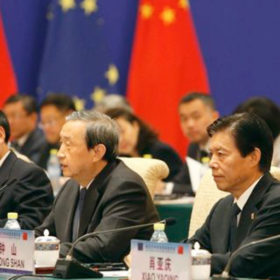
China extends antidumping and anti-subsidy duties on polysilicon imported from EU
Mocfom’s decision to extend antidumping and anti-subsidy duties on polysilicon imported from the EU is likely a reaction to the 18-month extension of the EU duties on Chinese solar modules. German polysilicon maker Wacker Chemie had previously agreed a minimum import price with China.
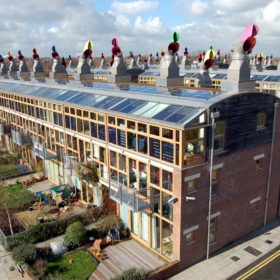
UK adds 111 MW of solar in Q1 2017
Great Britain installed 111 MW of new PV systems in the first three months of this year, according to provisional BEIS statistics. The country’s cumulative capacity now surpasses 11.85 GW.
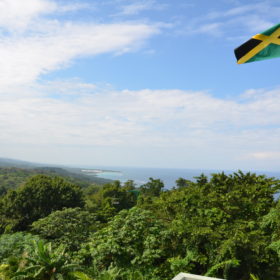
Jamaica targets $300 million renewable energy investments
The Caribbean country is seeking to accelerate its transition to clean energies, and to benefit from funds from the Green Climate Fund. Meanwhile, the government is also seeking to improve net metering for residential and commercial PV.
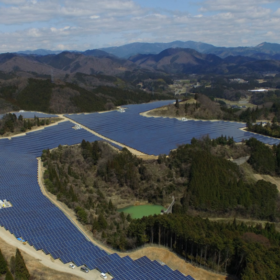
Pacifico starts building 258 MW in western Japan
The Tokyo-based developer has begun construction on what it claims will be Japan’s biggest PV project upon completion in September 2019.
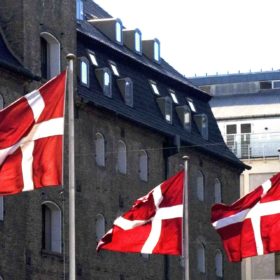
Denmark’s Energy Commission says incentives for renewables should be phased-out
A recently created Energy Commission has advised the Danish government to phase-out incentives for renewables, at the same rate as the technology becomes competitive with other energy sources. Meanwhile, Denmark has added only 3.7 MW of PV so far this year.
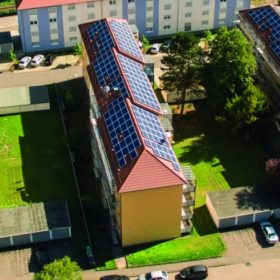
German government approves draft regulation for tenants’ solar power supply
The new regulation will likely to come into force by the end of this year. The German solar association BSW has welcomed the government’s decision, although it has asked for improvements.
Dangote Industries and Blackstone plan 100 MW solar plant in Nigeria
The Nigerian industrial group was granted funds to conduct the feasibility study for the 100 MW facility by the USTDA. The plant would be built in Kano State, in the north of Nigeria, where the two companies are also planning to construct a 1 GW coal power plant.

Kosovo must do more for renewables, EU says
The European Commission has said that Kosovo’s government needs to increase efforts to improve its energy system, and to provide more support for renewables, although it has recently revised its energy (and renewable energy) strategy up to 2020.
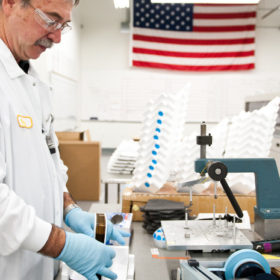
BREAKING: Suniva petition could start new global solar trade war
Today Suniva filed for relief under a little-known act that could exempt the United States from global trade agreements and allow President Trump to take trade action against solar imports from multiple nations. Suniva is asking for a minimum import price of US$0.78 per watt for modules and $0.40 for cells.
