
When hail hits PV: New research maps damage, testing, and mitigation
A new review examines the impact of large hail on PV systems, covering damage, testing methods, and mitigation strategies. Researchers highlight risks across Europe and the U.S. and explore ways to improve module resilience.

ACWA Power to build 2 GW of solar in Türkiye
Saudi Arabian energy giant ACWA Power will build two 1 GW solar power plants in Türkiye as part of a wider investment agreement covering 5 GW of new renewables capacity in the country.

Solar curtailment rises in Chile as grid constraints persist
Renewable curtailment in Chile reached 6,084 GWh in 2025, up 7.8% year on year, underscoring mounting transmission congestion as the country’s power mix becomes increasingly renewable.

Inside the PV recycling black box
How PV modules are treated at the end of their life is an increasingly important issue, but some recycling practices leave a lot to be desired. Scott Azevedo from Intertek CEA explores how asking the right questions, paying closer attention to end-of-life treatment, and steering volume toward good recyclers can have positive long-term consequences for the solar industry.

South Africa’s solar industry must ‘focus on execution’
With South Africa’s solar industry moving toward a phase of market-led growth, Sim Khuluse, from the South African Photovoltaic Industry Association (SAPVIA), says the challenge for the forthcoming year is moving ahead with grid modernization and expansion.
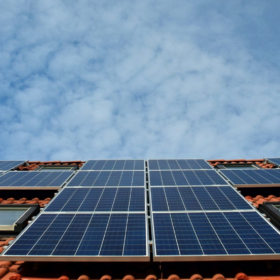
Rethinking module geometry to expand rooftop solar capacity
Rethinking module geometry beyond the traditional rectangle could increase rooftop PV capacity on irregular buildings by improving packing efficiency and expanding placement options.

South Korea to invest $223 million in next-generation distributed grid
The South Korean government has announced plans to invest KRW 321 billion ($222.6 million) in 2026 to upgrade regional distribution networks, deploy 85 energy storage systems, and expand solar integration while piloting microgrids and market reforms.

Solar module prices rise faster than expected in February
Solar module prices increased by €0.01 ($ 0.012)/W to €0.015/W in February, lifting levels 15% to 18% above the December 2024 low despite falling wafer costs, as manufacturers seek to restore margins after prolonged losses.
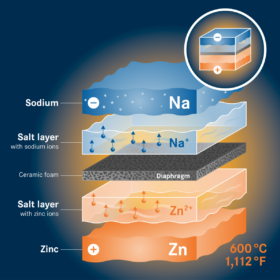
High-temp sodium-zinc batteries reveal causes of rapid capacity loss
Helmholtz-Zentrum Dresden-Rossendorf (HZDR) researchers have used operando X-ray imaging to reveal why sodium-zinc molten-salt batteries, operating at around 600 C and promising for stationary energy storage due to low-cost, abundant materials, experience persistent capacity loss.

Taiwan’s solar feed-in tariffs remain unchanged
The Taiwanese authorities have also introduced a repowering mechanism designed to encourage replacement of aging PV equipment.
