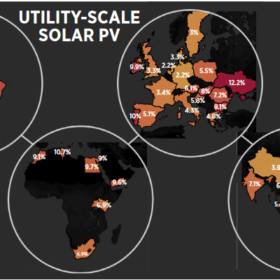
Germany, Netherlands and Sweden have lowest cost of capital for utility scale PV
The International Renewable Energy Agency (IRENA) has released new data on the cost of capital for solar PV, onshore and offshore wind in the period between 2020 and 2021. Results show that Germany and the Netherlands have the lowest cost of capital in Europe at 2.2%, while the United States, China, India, and Australia show values of 5.4%, 3.9%, 7.1%, and 4.6%, respectively.
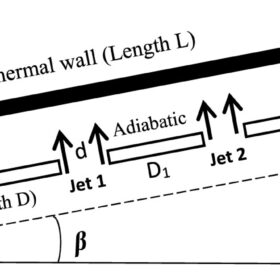
Solar module cooling tech based on nanofluid jets
The system consists of a double jet of nanofluid in a 2D channel placed below a heating plate that adheres to the photovoltaic panel. It uses water mixed with copper nanoparticles as a nanofluid.
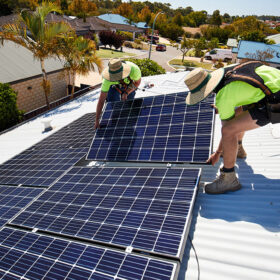
Australia’s cumulative installed PV capacity tops 29.7 GW
The International Energy Agency expects Australia’s “outstanding” economic fundamentals for residential and commercial rooftop solar will see the sector stabilize in 2023 after a new report revealed the PV market contracted in 2022, when the country added 4 GW of installed solar power.
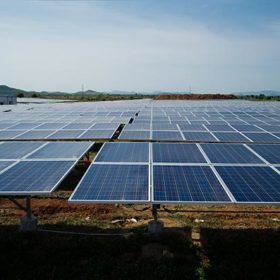
Indian government grants commissioning extension for solar projects on case-by-case basis
Solar Energy Corp. of India, NTPC and NHPC will examine developers’ requests for an extension to their solar and wind-solar projects on a case-by-case basis. The extension will only be granted if the developer has taken all possible measures to implement the project, such as land acquisition and orders for modules and balance-of-system supply, but couldn’t complete it for reasons beyond his control.
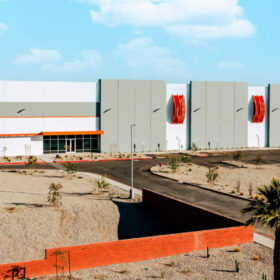
Ikea bets on Meyer Burger’s heterojunction solar modules
Between 2025 and 2029, the investment company of the Swedish furniture group will purchase solar modules produced in the US by the Swiss photovoltaic manufacturer. The agreement is the basis for Meyer Burger to increase annual production capacity at its Arizona site to around 2 GW.

Indian PV market must invest in quality infrastructure
In its latest monthly column for pv magazine, the International Renewable Energy Agency shares a series of recommendations gathered from sector experts to help India reach its ambitious solar targets. According to its experts, Quality Infrastructure (QI) will be crucial for the country’s PV market in the years to come. QI is an interdependent ecosystem of the different elements (accreditation, certification, standards, testing, metrology, inspection & monitoring) working together in harmony, and all associated services should be developed in unity and not in a piecemeal fashion. A sound and internationally harmonized QI not only ensures that PV products and services deliver as expected by customers and national energy authorities, but also enables more efficient and competitive markets based on a global economy on scale.

Mapping of green hydrogen projects in Brazil
A mapping of green hydrogen projects in Brazil shows that there are at least 42 projects under various stages of development in the country.
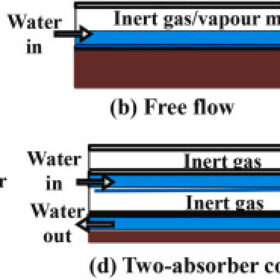
All photovoltaic-thermal system designs at a glance
An international research team has presented all possible system designs and applications for photovoltaic-thermal (PVT) technology. Their review includes conventional PV-T collectors, air-based systems, liquid-based installations, water-based collectors, refrigerant-based systems, heat-pipe-based technologies, dual air-water systems, building-integrated PVT arrays, and concentrated PVT collectors.
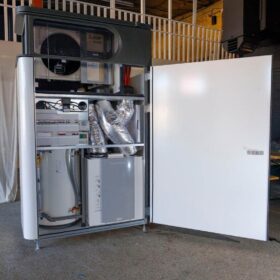
Netherlands exempts apartments and monuments from 2026 heat pump mandate
The government of the Netherlands has backtracked on its decision to implement a sweeping hybrid heat pump obligation from 2026. Multi-story apartment buildings and listed buildings will be exempted.
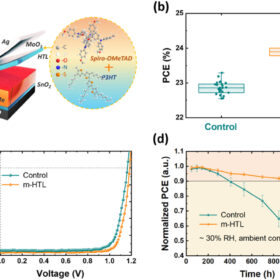
Perovskite solar cell achieves 24.3% efficiency, high stability via binary mixed hole transport layer
Researchers in China have built a hole transport layer with a mixed binary configuration integrating the polymer Regioregular poly(3-hexylthiophene) (P3HT) and Spiro-OMeTAD. They used it to build a perovskite solar cell that was able to retain 90% of its initial efficiency after 1,200 hours of storage in dark ambient environment.
