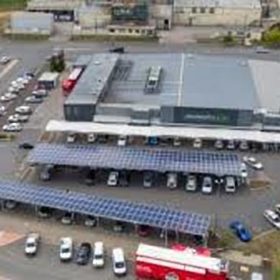
Woolworths becomes world’s first retailer to issue green bonds
The Australian supermarket giant is issuing green bonds to fund the development of low-carbon supermarkets and the installation of solar at its stores and distribution centers.
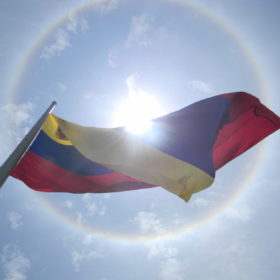
Venezuela plans its first utility scale PV projects
Although details are vague, the Vice Ministry of Alternative Energies is reportedly developing the country’s first medium sized projects to be connected to the national grid. It is also planning to implement distributed generation projects ranging in size from 1.5 MW to 3 MW in the crisis-torn nation.
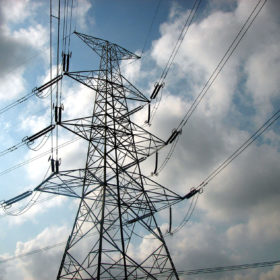
China offers insight into transition to subsidy-free solar
The emphasis on grid-parity PV has been highlighted in a consultation document that has emerged after several weeks of haggling in Beijing. Chinese analyst AECEA says the success of any subsidy-free effort would hinge on the ability of power companies to transmit and guarantee consumption of power generated by new projects.

Renewables & geopolitics: Russia
In the latest of our interviews about renewable energy and geopolitics, Indra Øverland – head of the Center for Energy Research – discusses the difficult relationship between Russia and renewable energy. Despite a belief the gas and oil superpower will have little interest in clean energy, Overland believes the world’s most extensive nation will use renewables to improve its domestic power supply, especially in remote regions. Russia has a highly continental climate, with lots of sunshine – more than most of Western Europe, Overland says. Whether it can take advantage of that potential, however, is unclear.
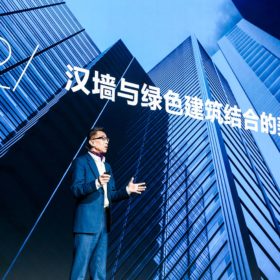
Hanergy plans to roll out industrial park development outside China
The Chinese thin film giant has transformed itself into a solar manufacturing equipment supplier and is set to expand a strategy which sees affiliates help fund industrial parks which then generate orders for its thin film production lines.
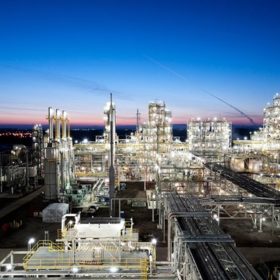
REC Silicon raises $20 million through private placement
The polysilicon maker said it will use the funds to improve its liquidity situation until access to the Chinese polysilicon market is restored. It sold 254,381,870 shares, which corresponds to approximately 9.9% of its oustanding capital.

Solar investment mostly up on venture capital and debt as money pours into large scale projects
Mercom Capital Group’s Q1 2019 Solar Funding & M&A report has registered $2.8 billion in venture capital, public market and debt financing, up from $2.5 billion a year ago. Large scale project financing reached a record $5.58 billion across 43 deals and there were 18 solar corporate M&A transactions.
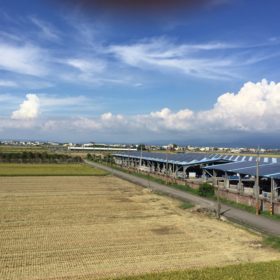
Taiwan becomes a GW solar market
TrendForce says the country deployed more than 1 GW of new PV for the first time last year, and predicts this year may see as much as 1.5 GW of new solar capacity. The nation’s cumulative capacity reached 2,618 MW at the end of last year, according to the International Renewable Energy Agency.
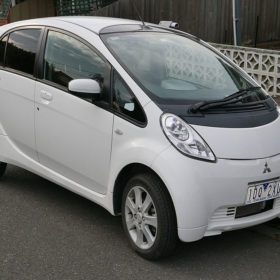
Mitsubishi offers residential solar-plus-storage EV charging in Japan and Europe
The Dendo Drive House includes a solar system, residential storage and a bi-directional charger. Mitsubishi says it reduces electric bills and fuel costs by enabling battery charging from the grid at night, when power prices are cheaper, and can also draw power from an electric vehicle.
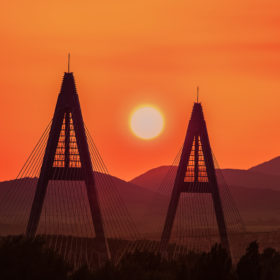
Hungary deployed more than 400 MW of solar in 2018
The nation had a record year for solar energy development. Most of last year’s new additions – 320 MW – came through a FIT scheme but a further 90 MW was represented by net metered installations. Hungary’s cumulative installed PV capacity reached around 700 MW in 2018.
