
UAE revises energy strategy in view of competitive PV prices
Falling solar prices are leading to a new energy strategy for the United Arab Emirates as local energy companies offer unbeatable prices that make green hydrogen increasingly affordable.
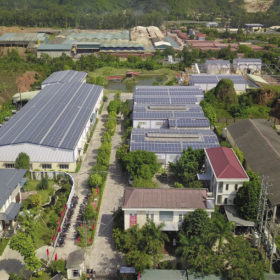
New GIZ guidelines to help drive Vietnam’s C&I rooftop market
Last Friday, the German development agency Deutsche Gesellschaft für Internationale Zusammenarbeit (GIZ) officially released its “RTS – Technical and Administrative Guidelines for Commercial and Industrial Projects” to further support the development of rooftop solar (RTS) in Vietnam. Earlier in the week in a JinkoSolar-organized webinar, Tuan A. Nguyen of the Ministry of Industry and Trade’s (MOIT) Institute of Energy provided an update on Vietnam’s growing PV market and especially the RTS segment. Mr. Tuan also coauthored the RTS Guidelines for C&I Projects.
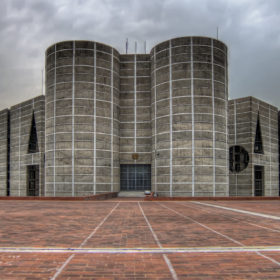
Bangladesh outlines plan for up to 40 GW of renewables in 2041
The most ambitious scenario fleshed out in a draft National Solar Energy Action Plan includes 16 GW of project capacity at large scale ‘solar hubs’ but actions will speak louder than words in a nation set to fall short of its current clean energy target.
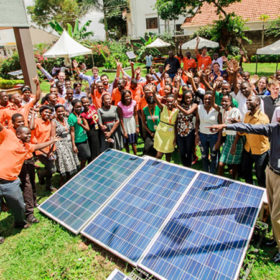
Fall in off-grid solar sales deprives 5m people of access to clean power
The latest edition of the Global Off-grid Solar Market Report by the World Bank and GOGLA has called for regulatory and financial support to help off-grid distributors create jobs lost to the Covid-19 pandemic.

Indian company tenders globally for supply of 350 MW of modules
State-run hydropower company NHDC is targeting 340-350 MW of generation capacity in a 1.5 GW tender being held in the state of Madhya Pradesh and needs panels to meet any award it secures.
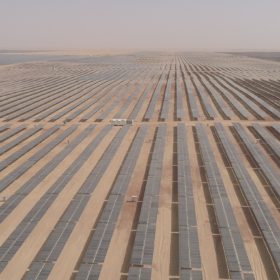
Scatec to drop the ‘Solar’ with hydro acquisition
The renewables business is set to acquire the SN Power hydropower operator belonging to Norwegian state-owned private equity business Norfund, with the $1.17 billion deal expected to go through in the first half of the new year. Scatec said the transaction could offer floating solar opportunities.
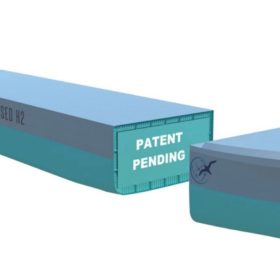
GEV to develop compressed hydrogen ship for Australian exports
Global Energy Ventures has revealed new designs for the H2 Ship, a compressed hydrogen ship capable of transporting 2,000 tons of hydrogen from green hydrogen hubs in northern Australia to trading partners such as Singapore, South Korea, China, and Japan.
The state of European energy
The proportion of clean energy consumed in the EU continues to rise but the European Commission’s State of the Energy Union report is critical of failings in energy efficiency, low-carbon-R&D spending, and the removal of fossil fuel subsidies.

Tata Power awarded 100 MW of solar capacity at 5 GW Indian mega park
The developer secured the grid-connected solar capacity in a 700 MW auction by state utility Gujarat Urja Vikas Nigam Limited which had a tariff ceiling of INR2.92/kWh ($0.04). The Dholera Solar Park, in Gujarat, is set to eventually have a 5 GW footprint.
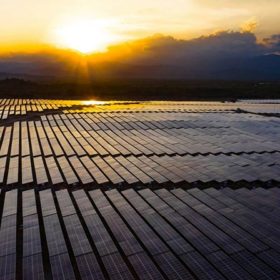
Vietnam opens 450 MW solar plant
Ho Chi Minh City-based construction company Trungnam Group said its army of laborers took just 45 days to perform site clearance for a project which took shape within 102 days.
