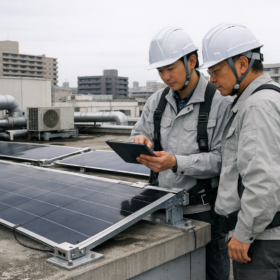
Japan publishes new guidelines for flexible solar cell installations
Japan’s New Energy and Industrial Technology Development Organization (NEDO) says its new design and construction guidelines for flexible PV and perovskite solar installations will help ensure the safety and reliability of systems deployed on low-load rooftops and wall surfaces where conventional panels cannot be installed.

Solar-to-X could redefine Iran’s energy future
Iran is widely known for its oil and gas resources, but its strongest long-term energy asset may be the sun. New research shows how solar PV could drive a cost-competitive transition across power, heat, transport, industry, and desalination, while opening the door to a broader Solar-to-X Economy.

China’s new five-year plan deepens shift toward focus on renewables system
China’s 2026 to 2030 policy plan elevates clean electricity as a central driver of economic growth, with greater emphasis on system integration and industrial use.

UAE installs around 1 GW of solar in 2025
Analysis from GlobalData finds the UAE’s cumulative solar capacity increased from 5.7 GW to around 6.7 GW last year. The country’s annual solar deployments are forecast to increase in the coming years, with 20 GW of installed solar expected by the end of the decade.
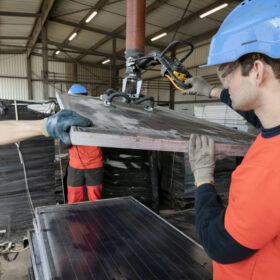
France selects six operators for PV module recycling capacity
France’s solar recycling body has selected Envie 2E, Galloo, Rosi, RVE, and First Solar to manage rising volumes of end-of-life panels, with combined capacity exceeding 45,000 metric tons (MT) per year.
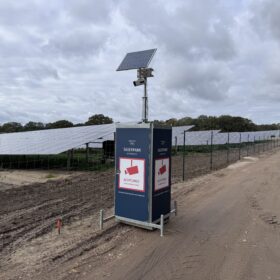
How EU NIS2 is reshaping physical and cybersecurity for PV plant operators
The European Union’s NIS2 Directive is pushing PV operators to strengthen both cyber and physical security, treating solar assets as critical infrastructure. It also highlights the need for stronger physical protection measures, such as site surveillance, access control, and perimeter security to prevent tampering and intrusion.
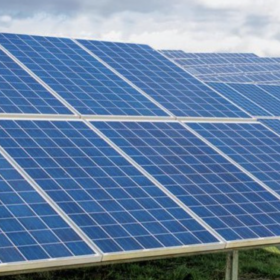
India’s 35 GW of renewables at risk of curtailment, warns Crisil Ratings
Crisil Ratings says rapid renewable energy additions and slow grid expansion could expose more than 35 GW of capacity to curtailment in India.
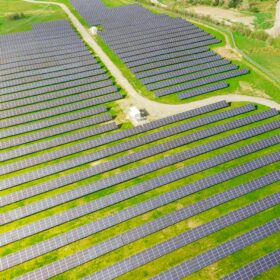
Italian solar sector gears up for cybersecurity regulations on PV systems over 100 kW
The Italian energy regulator is requiring PV and wind plants over 100 kW to install central controllers with remote active power control, with staggered compliance deadlines up to 2028. The rules, coupled with rising digitalization, are driving cybersecurity upgrades, AI-based monitoring, and grid-aware operational practices across the renewable energy sector.

Ukraine prioritizes solar-plus-storage in renewables auctions
Newly-implemented rules governing Ukraine’s energy market introduce solar-plus-storage systems as a separate auction category, ease regulatory barriers governing standalone storage projects and establish processes for renewable energy facilities located in Ukraine’s occupied territories.
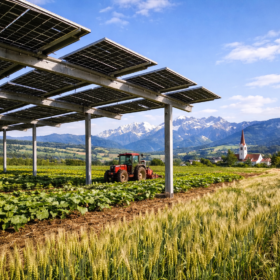
Austria could harness 90 TWh of agrivoltaics using 5–16% of cropland
Austrian researchers conducted a techno-economic analysis of agrivoltaic systems and found that 5%–16% of the country’s cropland would be required to meet its solar electricity targets.
