Chinese developer buys back three-year senior notes issued three months ago
The board of bailed-out Singyes Solar has bought back $18.4 million worth of notes issued in Singapore in late December and also hoovered up $240,000 worth which were unclaimed in the fundraising round.
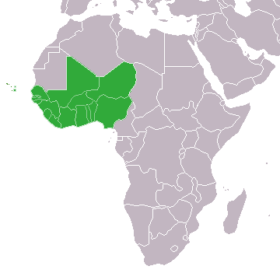
Solar emerging as best bet for West Africa’s future energy mix
The Economic Community of West African States should prioritize the development of solar PV to meet surging energy demand over the next 30 years, according to a newly published study.
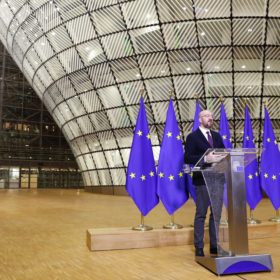
European Council raises hopes of green stimulus package
The economic fallout of the Covid-19 outbreak is yet to be determined but as legislators scramble to establish fiscal support for the EU it is becoming clear the suits in Brussels are not prepared to scrap their hard-won Green Deal plan. Quite the opposite, in fact.

Covid-19 and dependence on China’s PV supply chain
The Asian Development Bank says developing countries in Asia and the Pacific should consider developing their own solar industry supply chains as the Covid-19 pandemic has exposed their over-reliance on China to carry through the energy transition.
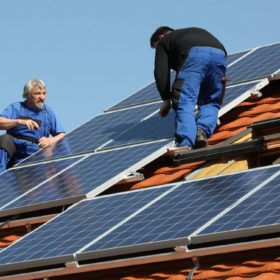
Limited impact of Covid-19 on Germany’s rooftop PV market
The Covid-19 crisis has far-reaching effects – including on the PV industry and solar installation market. The results of a survey conducted in a recent pv magazine webinar painted a picture of businesses unsettled by the pandemic but still taking orders at present.
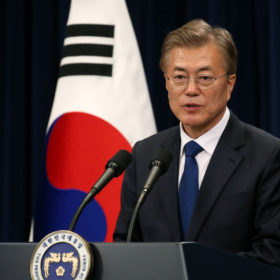
South Korea’s president makes zero-carbon economy election pledge
For the first time ever, President Moon Jae-in’s ruling Democratic Party has vowed to achieve a zero-carbon economy, just weeks ahead of the April 15 legislative election.
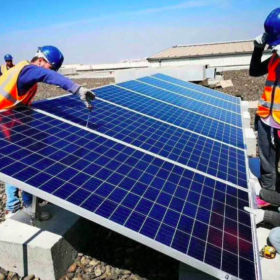
Covid-19: Revenue dip could spell trouble for Indian PV producers
Sliding electricity demand and declining commercial and industrial activity in India could prompt distribution companies to block or delay payments to solar power producers.
First Solar manufacturing unaffected by Covid-19 measures
The US solar company says its production lines in Ohio, Malaysia and Vietnam have thus far been able to carry on operations. The company says measures have been taken to protect its workers at all of its premises.
A power-to-gas system integrating co-electrolysis and methanation
Researchers in Italy extensively analyzed four different configurations of their proposed system to assess its potential, including under non-optimal, ‘off-design’ conditions and concluded that, for now, subsidies would still be required for the commercial production of synthetic natural gas.
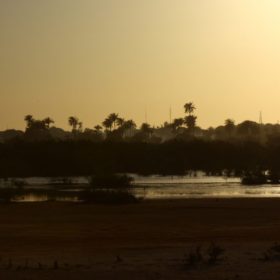
Gambia maintains solar ambition
The country’s power utility has completed the pre-selection process to seek developers for a 20 MW solar project in the Banjul region. The project will feature up to four PV plants and will be developed under the national Electricity Restoration and Modernization Project.
