
Turkey to introduce provisions for storage
The Turkish Energy Market Regulatory Authority has published draft guidelines for the integration of storage in the energy system. The new provisions are expected to come into force at the beginning of next year.
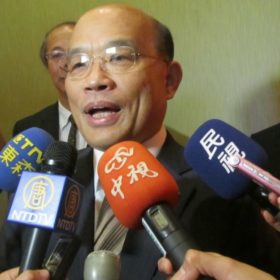
Taiwan wants 3.7 GW of new solar by 2021
Prime minister Su Tseng-chang announced the ambition and said the new solar plan for 2019-20 will bring investment and business opportunities of around US$7.5 billion.
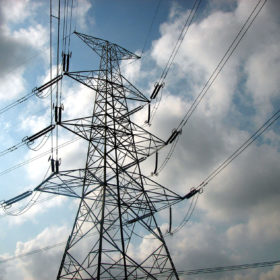
Northern Ireland grid aims to be ready for 95% renewables
The U.K. province’s grid operator SONI has announced a £500 million plan to prepare the network for an almost fully renewable electricity system within just five years. Despite the U.K. being seemingly paralyzed by Brexit, the network operator says it can already cope with 65% clean energy in the mix.
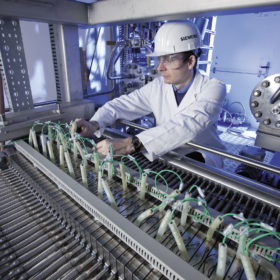
The slow, inexorable rise of green hydrogen
The International Renewable Energy Association says the integration of hydrogen into the energy transition will not happen overnight and electrolysis costs will not be halved until the 2040s. That hydrogen and related products could revolutionize the world energy landscape, however, is not in doubt.

Greece and Hungary pledge to phase out coal
Athens-based policy group The Green Tank labelled Greece’s decision “historic” while Europe Beyond Coal, an alliance of civil society groups working to make Europe coal free by 2030 said Hungary should target a more ambitious 2025 phase-out.

Court halts Indian state’s attempt to renegotiate PPAs
A bid to renegotiate agreed solar and wind power tariffs in Andhra Pradesh appears to be part of a deliberate campaign by the chief minister elected in May to erase the renewable energy commitments made by his predecessor.
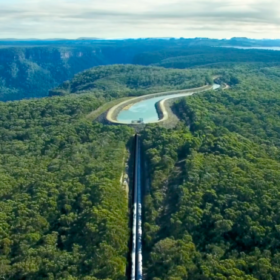
China set for 40 GW of pumped hydro storage next year
The showpiece 3.6 GW Fengning county project which will offer grid services and back-up power at the 2022 Winter Olympics is part of a 31.15 GW construction pipeline of projects, many of which are set to come into service next year.
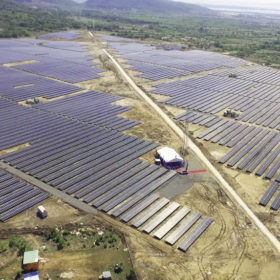
Vietnam may cut FITs for large scale solar 20%
The tariff for rooftop PV will be maintained at $0.0935/kWh but payments for ground-mounted and floating solar could be cut to $0.0709/kWh and $0.0769, respectively. The previous FIT scheme, according to government figures, has driven the deployment of around 5 GW of solar generation capacity.
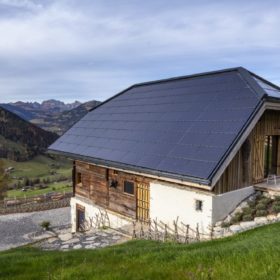
Bigging UP the carbon-free pioneers: Step forward 3S Solar Plus
pv magazine’s UP campaign aims to highlight industry movers who embrace carbon reduction and the circular economy in their operations and Swiss BIPV manufacturer 3S Solar Plus boasts an impressive sustainability record.

Ethiopia’s plans for solar mini grids move forward
The Ethiopian Electric Utility is seeking proposals for 25 mini grid projects which are being backed by the African Development Bank.
