
Trump’s trade war tweets badly timed for Chinese solar manufacturers
Latest tirade may simply be a crude bid to up the ante with a high-profile Chinese deputation due to visit the U.S. in the latest round of trade talks this week but its timing is worrying for the Chinese solar companies struggling under huge debts.

Iraq kicks off huge 755 MW solar tender
The Ministry of Electricity is tendering a 30 MW plant, four 50 MW projects, and two much bigger projects, with capacities of 225 MW and 300 MW. The plants are intended to begin commercial operations next year.

Interview: Is Russia’s embrace of renewable energy a reality or a myth?
The superpower has always been seen as a fortress for oil and gas but positive signs are emerging from its renewable energy sector.
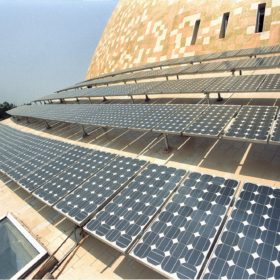
France sets second-quarter FITs for rooftop solar systems
The feed-in tariff granted reduces each quarter in line with how much solar capacity was installed in the previous three-month period and the drop will be felt more keenly in sun-rich Corsica and the nation’s overseas territories than on the mainland.
Italy and Tunisia revive plans for 600 MW interconnector
The power line, under development by Italian transmission company Terna and Tunisian gas and electricity group STEG since 2003, was originally conceived to export power generated in Tunisia to Italy but is now based on an electricity exchange in the opposite direction.
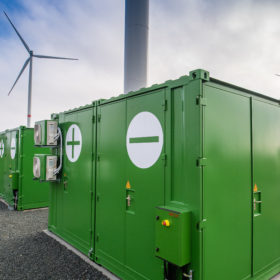
Renewables and geopolitics: storage could rip up the current global picture
In the latest of a series of interviews about the geopolitics of renewable energy, Indra Overland, head of the Center for Energy Research at the Norwegian Institute for International Affairs, explains how storage could change the global energy landscape by eliminating entrenched strategic dependencies. The impact of storage, he says, will be stronger in regions dependent on fossil fuels.
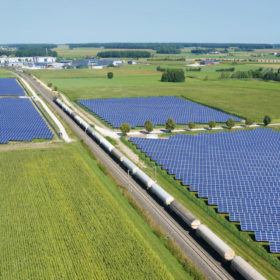
Germany added 350 MW of new solar capacity in March
The strong growth registered in the first quarter of the year – when 1.27 GW of new PV was deployed – will prompt a 1.4% reduction in the FIT price for the three-month period up to July.

China confirms FIT level payments – but they will be ‘subject to competition’
The Beijing authorities have confirmed the payment levels to be made according to type of project and region from July onwards but an auction process will be involved so the figures are for guidance only. No decision has yet been made on the 30 GW of capacity added since the end of May.
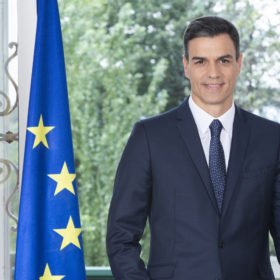
Renewables may be the victor in Spanish election
Although it is still unclear how the victorious Socialist Party will build a majority in parliament, listed Spanish energy companies such as Solaria and Audax saw the price of their shares rise significantly after the vote.
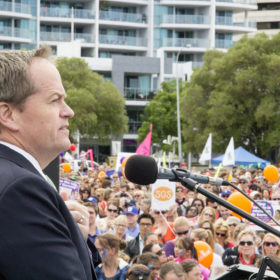
Labor plan to aggregate 4,000 schools into virtual power plants in $1 billion solar program
Australia’s federal Labor party has pledged to roll out PV generation and batteries at schools across the nation, and to create VPPs supporting up to 365 MW of capacity.
