‘True grid parity about more than electricity price’
The head of Mercom Capital says solar has a long way to go before it can stand without policy support. Effective grid parity will only be achieved when the cost of PV electricity factors in the expense of grid upgrades and the storage systems its intermittent nature requires, says Raj Prabhu.
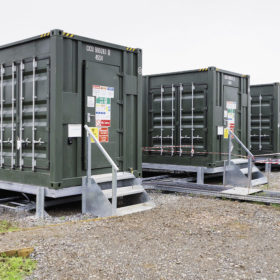
Australia will need 15 GW of utility scale storage by early 2040s
Increased storage and strategic transmission development will be needed to ensure the most economic and lowest risk transition of Australia’s energy system, the Australian Energy Market Operator said in its latest study. In 20 years’ time, the need for storage will be at a scale not seen before in the national electricity market, and pumped hydro and distributed storage are set to play major roles in lowering electricity prices and building a reliable and resilient power system.

Hanergy wraps 460 kW of CIGS around Chinese skyscraper
Copper indium gallium selenide thin film technology is on the fly as conversion efficiency closes in on that of crystalline silicon. The technology can be integrated neatly onto facades of otherwise energy intensive commercial buildings. The potential is huge even if the conversion efficiency retains some limitations.

Grid data transparency vital to making the case for renewables in Vietnam
With a glut of solar capacity having come online this year, cheaper financing would help keep some of that momentum but policymakers cannot be persuaded of the economic benefits of clean energy unless state-owned utility EVN opens up.

Has solar lost its sheen for India’s EV push?
While the nation’s recent Union budget announced steps to create an electric vehicle market, the solar sector still has issues that have not been addressed.
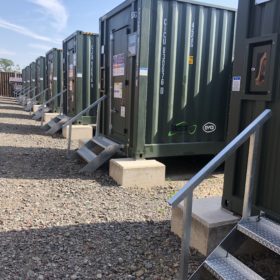
Grid service payments the key to unlocking China’s energy storage potential
The world’s biggest solar market could be about to replicate that feat in energy storage, provided it manages to reform the payment system for rewarding the grid services offered by batteries.
E.on switches UK residential offering to 100% renewables
The 3.3 million U.K. households that get their electricity from E.on will receive only renewable energy. The company referred to a public opinion poll as a motivation for the move.

This could be a watershed year for renewables in the mining sector
As one of the most energy-intensive industries, the ‘resource sector’ is getting serious about adding cheap solar and wind energy into its mix, to boost returns. Although still predominantly underpinned by gas or diesel, mine operations are increasingly deploying hybrid solutions, highlighting the potential of renewables – particularly as momentum builds for green hydrogen to play a role in future microgrids.

Solar financing up but policy support is still crucial
Talk of ‘grid-parity’ and ‘subsidy-free’ solar has had industry figures cherishing the ideal of a sector that can operate free of the caprices of government but a peer behind the latest global PV funding figures demonstrates just how dependent on policy the solar industry remains.
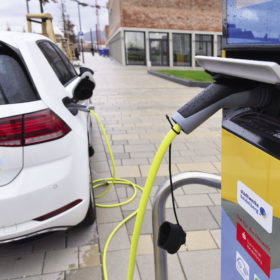
Electric vehicle announcements point way ahead for UK transport – with or without government support
Two of the nation’s largest commercial fleet operators have pledged to go all-electric by 2030, beating the government’s ambition by a decade, and carmaker Jaguar Land Rover has made a big electrification announcement – but insisted the politicians need to show similar bold ambition.
