
The Windy – or maybe that should be nuclear – City will go 100% renewable
Chicago may be the largest city in the U.S. to commit to 100% renewable energy and has set a 2035 target date. The famous city’s long association with nuclear power says a lot about the future of clean energy Statesside.

Development banks unlock €38 million for Ukrainian PV plant
Black Sea and European lenders have loaned €19.1 million each to a 57 MW solar plant in southern Ukraine, as the country scrambles to renew its electricity sector. The EBRD is committed to lending €250 million to renewables projects in Ukraine to help the country to meet its 11% clean energy target for 2020.
Reading between the lines: What is the real message of BP’s Energy Outlook 2019 report?
The rise of renewables may have hogged the headlines but there is, nevertheless, a reassuring underlying message to investors with their money in fossil fuels. However there may be hope in meeting the Paris Agreement goals, if only we could encourage a few more trade wars…

EDF negotiates Luxel acquisition to boost its French solar deployment
France is set to have a near-3 GW annual solar market for the next six years from tenders alone and energy giant EDF wants a 30% piece of the action. To do so, the utility has entered negotiations with Luxel shareholders to acquire the PV developer.

Chinese city wants 700 MW of new solar within two years
The capital city of pollution-blighted Zhejiang province has announced an ambitious clean air policy in the wake of Beijing’s call for local governments, big lenders and power companies to pull out the stops to restart the solar revolution.
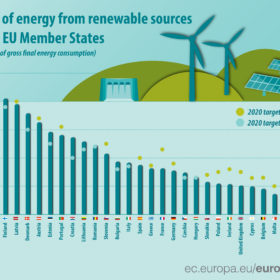
PV explosion not enough to keep EU on track for 2020 renewables ambition
Despite solar’s explosive growth, the bloc is unlikely to meet its 20% clean energy target. Transport in particular remains a drag, with slow adoption rates for alternative fuels. Wind power supplanted hydro as Europe’s largest renewable electricity source.

US solar installations grew in 2018 despite tariffs
Clean energy analyst BloombergNEF says the U.S. installed 11.7 GWdc last year – 15% more capacity than earlier estimated – as well as 292 MW of batteries. Despite new solar and wind growth, and coal closures, however, emissions still rose from 2017 levels on the back on increased gas use.

Malawi launches 20 MW solar tender
Utility Egenco is seeking developers for a large-scale solar power plant in Salima, in central Malawi.
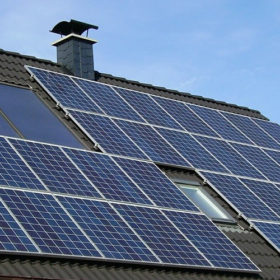
The reform of the European electricity market is imperative for the PV revolution
Antonio Delgado, founder and CEO at AleaSoft Energy Forecasting has analysed the proposal for the reform of the European electricity market, which is still to be approved by the European Parliament. Below he discusses its most relevant aspects for the wholesale electricity market.
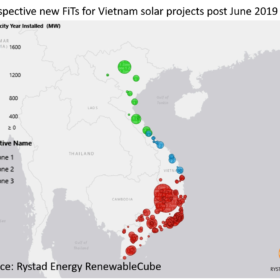
Vietnam mulls multi-layered FIT scheme as it kicks energy transition into gear
With its feed-in tariff set to expire at the end of June, Vietnam is considering different levels of payment, classified across three irradiation regions and involving four solar technologies. Future payments would range from $0.0659-0.0985/kWh, with the cloudy north in line for the highest tariffs and with the government likely to revise tariffs for new projects every two years.
