
Croatian utility HEP issues call for utility-scale solar and other renewables
Interested developers of large-scale PV plants, with more than 2 MW capacity, have until the end of the year to send proposals. The expression of interest is for projects to be developed with the utility or to be sold to it.

Brazil preps auction for non-interconnected state of Roraima
The procurement is planned for May 16 and will award 15-year PPAs to projects based on conventional and renewable energy generation. Solar could help remove the state’s reliance on power generated by a company based in crisis-torn Venezuela.

Rise of corporate solar behind 950 MW of new capacity in US state
Almost all of utility Georgia Power’s proposed renewable energy procurement in its latest integrated resource plan is to serve demand for large users with corporate sustainability goals, following Facebook’s commitment to the state.

Solar refuses to lie down and die in the UK, says industry body
Although the prospects for large-scale British solar appear grim, the U.K. trade association for the industry says the compelling economic case offered by PV is ensuring activity continues despite a prolonged policy vacuum.
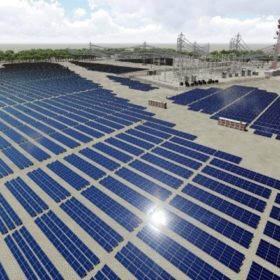
Advantage solar in Colombia’s first renewable energy auction
Some 22 projects were admitted to participate – 17 of them solar – in the country’s first RE procurement exercise, which will be held on February 26.
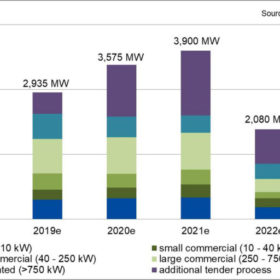
Germany to install more than 10 GW of PV before 2022 contraction
Extraordinary PV tenders by the federal government will provide for more growth. Market research company EuPD Research expects newly installed capacity of 4 GW in 2021. After that, however, the market could see a sharp reduction, after the 52 GW cap for solar subsidies is reached.

Spain hits 5 GW milestone
Approximately 261.7 MW of new PV systems were deployed in the country last year, according to provisional numbers from solar energy association UNEF. Once again, rooftop PV for self-consumption drove demand, although 26 MW of ground-mounted solar parks were connected in 2018.
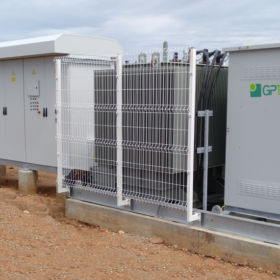
GPTech plan to manufacture inverters in South Africa
The production line would mean the Spanish company would comply with local content requirements. GPTech says its order book exceeds 400 MW, including 200 MW of large-scale projects in South Africa.

Indian state of Tamil Nadu floats new solar policy to generate 9 GW by 2022
The state government has unveiled its new solar energy policy. The ambition would encompass projects, programs and installations relating to solar PV and thermal energy, and is aimed at utilities as well as energy consumers.

Latest figures confirm large-scale solar is dormant in the UK
An encouraging number of new installations at the end of 2018 was almost entirely accounted for by the smallest household systems and is probably down to the looming end of the FIT program, which appears to typify the story of British solar to date.
