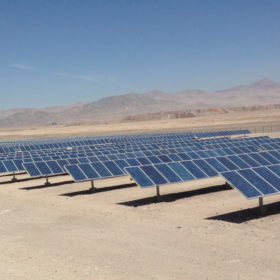
Developing countries biggest installers of renewables – BloombergNEF
In a new report, BloombergNEF notes a significant uptake in renewable energy in developing countries, which are clearly outperforming OECD countries. The trend is due to reductions in equipment costs and new business models that enable access to capital. Still, many emerging markets are also the biggest installers of new coal capacity. India and China alone, are said to account for 81% of newly added coal-fired power stations.
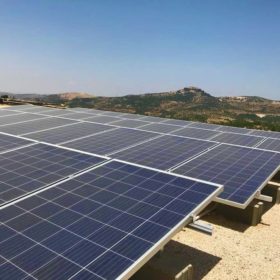
Jordan: Effective funding schemes for small-scale PV
Jordan has taken great strides to green its energy mix. In addition to the successful implementation of many large-scale projects, small PV systems – mainly under the net metering scheme – are booming in the country.
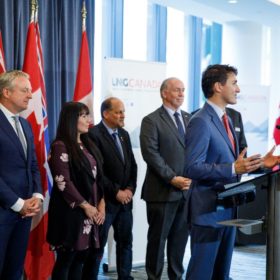
Canada to allow tax write-off for C&I renewable energy assets
The news came with Canada’s Fall Economic Statement. Through the new policy, the business case and access to finance will be improved to accelerate the adoption of renewable energy resources. This February, Canada proposed phasing out coal generation by 2030.
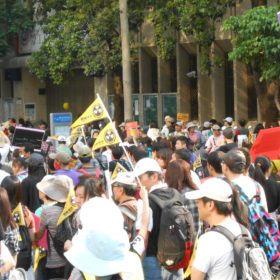
Taiwan votes in favor of nuclear power
On Saturday, voters in Taiwan approved a referendum to stop the phase-out of nuclear power. Some fear the decision could slow down the development of the renewable energy industry on the island.
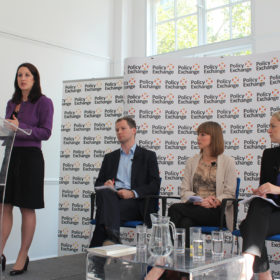
UK policymakers signal U-turn on toxic tariff scrap plans
Rachel Reeves, Chair of the Committee for Business, Energy and Industrial Strategy (BEIS), has released a comment indicating the discontent with which she views government plans to scrap export tariffs on 31 March 2019. The scheme remunerates small-scale generators, and its abolishment has been likened to theft and sparked a feud between the industry and politics. Last week, U.K. Energy Minister Claire Perry also said that forcing generators to export for free would be “wrong”.
UK regulator reveals power companies owe almost £63m to renewable energy obligation pots
Four electricity suppliers have been named by Ofgem for missing payment deadlines for penalties prompted by their failure to meet renewable energy buying obligations. A separate fund for small-scale generators, paid for by energy suppliers, also has a financial shortfall.
Belgium preps for energy transition with blockchain, AI and other innovations
Belgian grid operator Elia has published a vision paper explaining how it intends to link consumers’ behavior at lower voltage levels with price signals in the wholesale electricity market, thus also enabling better integration of renewables.
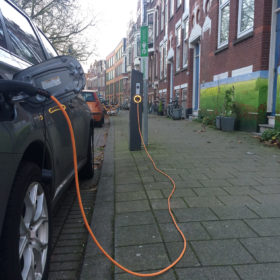
‘It’s time for politicians to deliver’
With COP24 climate change meeting looming, a German-led e-mobility and renewable energy alliance has signalled it is time for elected members to start delivering on carbon emission reductions before we pass the point of no return.
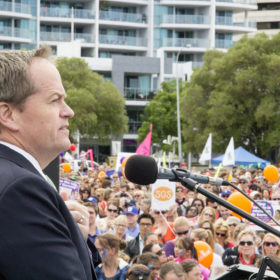
Australian opposition unveils “clean energy powerhouse” policies for 2019 election campaign
Federal Labor leader Bill Shorten announced the party’s ‘all of the above’ plan for Australia’s energy sector. A ramped-up National Energy Guarantee, project auctions under a CfD structure, grid infrastructure investment, energy efficiency and a boost to battery storage all feature.

Double blow for Indian government as mega tenders meet with apathy
Only three bidders have come forward for huge manufacturing-linked solar and solar-wind hybrid procurement exercises. The separate auctions – originally intended to drive 12.5 GW of new generation and 5 GW of manufacturing capacity – prompted figures of just 3.05 GW and 600 MW, respectively.
