Fears UK autumn budget could see a coal renaissance
Analysts have released a report which examines multiple carbon pricing scenarios, and their effect on UK power bills, renewables and the carbon budget. The UK’s Carbon Price Support could be lowered in the autumn budget next week, putting the nation further off course on its carbon budget. A high CPS would foster renewables, without driving electricity bills up.
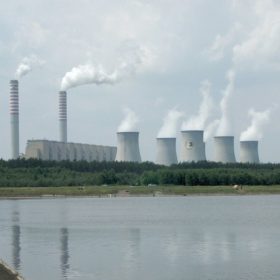
Cambodia needs solar to drive down electricity prices
According to the UNDP, a full economic evaluation of the costs and advantages of solar energy in the country is necessary, as Cambodia’s government is planning to expand its power system through coal and hydro.

Large-scale projects, net metering and solar leasing for Malaysia
Minister announces new-year changes to try and drive further PV adoption in the populous southeast Asian nation.
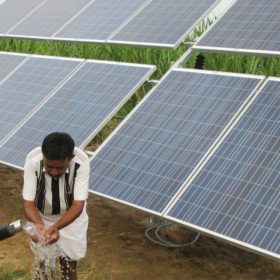
Hitting 76% of its solar ambition would still be some achievement for India
Analysts are weighing into the debate over the Ministry of New and Renewable Energy’s big solar plans, but pointing out even a partial victory would set the foundation for future solar triumphs.

The future is mono: An interview with Longi President Zhenguo Li
In this interview with pv magazine, the president of integrated monocrystalline PV maker Longi Solar gives his perspective on market and policy changes in China, Europe and the United States, as well as giving an update on his company’s very rapid growth.
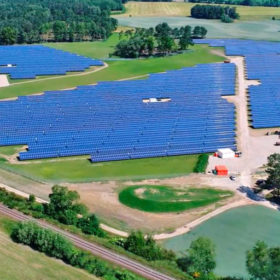
Germany’s auction for large-scale solar concludes with average price of €0.0469/kWh
The final average price was slightly higher than that of the previous auction of the same kind. Successful bids were between €0.0386/kWh and €0.0515/kWh per kWh. Unlike the parallel wind energy tender, the tendered capacity was significantly oversubscribed, once again.

Subsidy payment delays put northwest China PV projects at bankruptcy risk
An investigation by mainland China regulators has found that subsidy payment delays in the northwest region of Ningxia are putting PV projects at risk of bankruptcy.

Reports of death of US nuclear and coal bailout may not be exaggerated
Rumors of a u-turn on energy policy in the White House have been substantiated by pv magazine’s enquiries, although the respite for renewables may prove temporary, thanks to another fossil fuel-friendly nomination by President Trump.
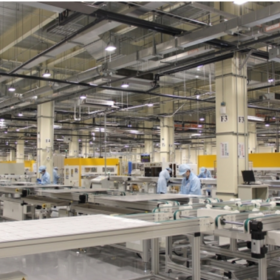
Chinese market turbulence affects another slew of PV employees in Taiwan
TSEC is planning to cut a fifth of its workforce as it changes focus to produce higher-efficiency PERC cells, against a backdrop of more generic products swamping the market because of a slowdown in the world’s biggest market.
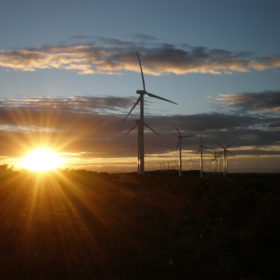
‘There is no alternative to a world of 100% renewables’
Electrifying the global energy system with clean energy is the only way to reach the targets set by the Paris agreement on climate change and avoid the catastrophic scenarios outlined by the recent IPCC report. In an interview with pv magazine, Christian Breyer – Professor of Solar Economy at Finland’s Lappeenranta University of Technology – explains a 100% renewables model is not only technically feasible, but also the cheapest and safest option. With solar and storage at its core, the future energy system envisaged by Breyer and his team will not only stop coal, but also nuclear and fossil gas, while seeing solar reach a share of around 70% of power consumption by 2050. By that time, PV technology could cost a third of its current price.
