
Eight more London boroughs sign up to mayor’s solar vision
Labour politician Sadiq Khan has expanded his Solar Together group-buying scheme for rooftop installations in London after more than 1,000 households and small businesses signed up to discounts on residential systems under the initial phase.
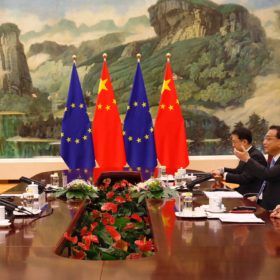
EU and China to co-operate on clean energy technology and emissions trading
High-ranking officials from China and the EU have signed a joint statement to foster technological and political co-operation in clean energy. The regions will also develop emissions trading systems further, with officials seeing such schemes as a policy tool to foster innovation for a low-carbon economy.

Indian government body recommends 25% tariff on Chinese and Malaysian cells, modules
Phased import tariff would fall to 20% 12 months after introduction and 15% for final six months of a proposed two-year period. Industry watchers say the cost of Indian solar energy could rise by up to 30%.

The weekend read: China’s global power play
With all the uproar in China about the impact of the May 31“2018 Solar PV Power Generation Notice” issued by China’s National Development and Reform Commission, National Energy Administration, and Ministry of Finance, one could think that China’s government has lost faith in solar PV’s potential to contribute to the country’s historic shift from coal-fired power to clean renewable energy sources. But nothing could be further from the truth.
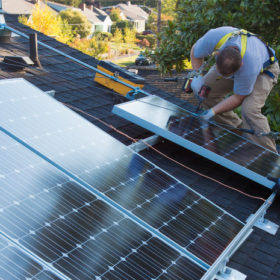
Pennsylvania lays out a plan for 11 GW of solar by 2030
The state’s environmental department has participated in a study which calls for the state to increase installed solar 36-fold, to reach 10% of all generation by 2030.
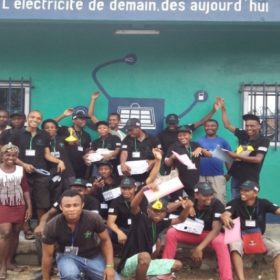
Veolia Foundation supporting a nano-grid project in Madagascar
The project connects four to six households, and lets dwellers pre-purchase daily access to electricity using a mobile app. A successful trial phase has just been finished and the executing association, Nanoé Développement has set new goals to reach in the near future.
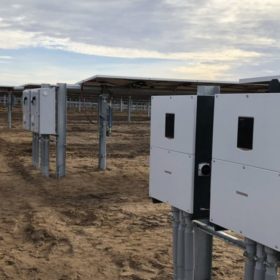
US: Mixed impact of proposed Section 301 tariffs on inverter makers
GTM Research says the 10% tariffs that the Trump Administration is calling for are “significant”, and some companies and sectors will be affected more than others.
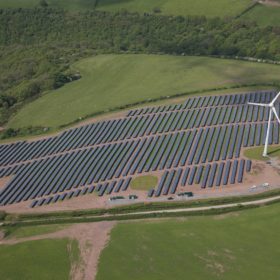
UK’s decarbonization depends on continued growth of EVs, RE, storage – National Grid
Outlining energy pathways for the next 30 years and beyond, the U.K.’s National Grid has released four different scenarios, considering growing electricity demand and a significant increase in energy infrastructure from new renewable generation and EV charging networks. Only two of them meet the U.K.’s 2050 carbon reduction target on the back of a large growth of renewables and energy storage, and almost completely decarbonized transport.
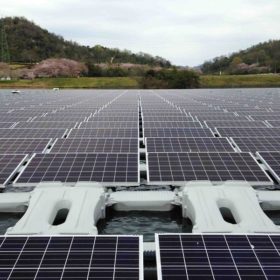
South Korea to set new PV construction rules after landslide destroys array
The South Korean government has revealed plans to introduce new environmental guidelines and rules on where PV projects can be built, following a public outcry after a landslide smashed into an operational solar array south of the city of Daegu.

Solar glass: European PV module manufacturers fear being “taken hostage”
Currently, new anti-dumping proceedings against solar glass makers from Malaysia are taking place in the EU. Imports of Chinese solar glass have been subject to high anti-subsidy and anti-dumping duties since 2014. The European module manufacturers fear further massive competitive disadvantages and the danger of an Interfloat monopoly in Europe.
