
EU grants €578m for France-Spain renewable energy transmission link
In what is the largest ever energy grant to be issued by the EU, France and Spain’s interconnection capabilities are to be boosted to 5 GW once an undersea cable across the Bay of Biscay is finalized.

Taiwan to raise FIT rates for first half of 2018
The Taiwanese Ministry of Economic Affairs (MOEA) today announced a 9.09% increase to FIT rates originally proposed in September for rooftop solar installations up 20 kW, in a bid to encourage further public participation in its Green Energy Roofs project.
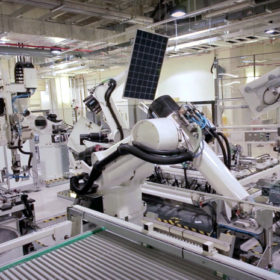
Trump opens the door for specific products, nations to be excluded from tariffs
The U.S. President’s proclamation provides a path for specific products to apply for exemption from tariffs, which had been sought by both SunPower and the government of South Korea. Additionally, imports from a number of developing nations are exempt as long as import levels remain small.
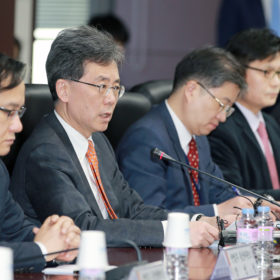
US solar tariffs: Korea to file WTO petition, Mexico considers legal action, module costs to increase
As anticipated, the fallout from U.S. President Trump’s decision to impose tariffs of up to 30% on solar imports has been big. The latest reactions include the Korean Government’s announcement that it will file a petition with the World Trade Organization (WTO) and Mexico’s promise of legal action. BNEF, meanwhile, expects module costs to increase by US$0.10/W.
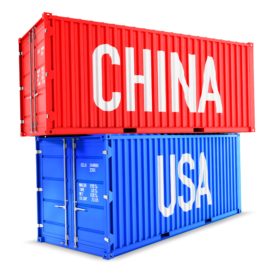
Trump’s trade disputes raise concerns about overseas expansion, Chinese government says
As reported by Reuters, the Chinese Ministry of Industry and Information Technology voiced concerns that frequent trade disputes may hurt China’s overseas expansion and would increase costs throughout the global solar market.
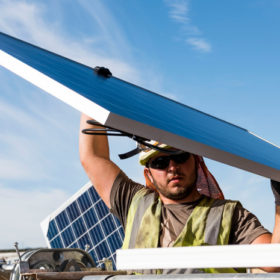
GTM Research predicts 11% reduction in the US solar market from tariffs
President Trump’s tariff decision was not the worst-case scenario for the U.S. market, but GTM Research says it will still have effects, particularly in marginal and emerging regional markets.
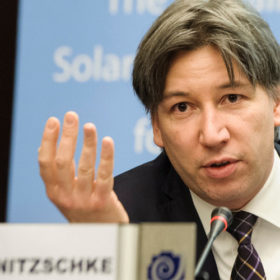
US solar tariff announcement elicits mixed feelings
SolarPower Europe and SAFE see a resulting contraction in the market, while EU ProSun is calling for the preferential treatment of EU solar manufacturers in the U.S. BNEF says a general window for negotiation of individual country agreements may be possible in the next few weeks.
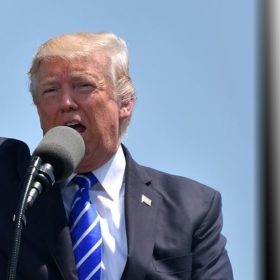
Trump levies graduated tariffs starting at 30%, exempts 2.5 GW in cells
The decision, released on U.S. Trade Representative Robert Lighthizer’s website, could keep current U.S. module manufacturers in business by keeping their cell lifelines open.
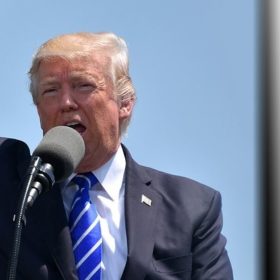
Source: US solar tariffs won’t be as severe as feared
A source told pv magazine that the Section 201 decision has been made, but announcement last Friday was delayed. While tariffs will be imposed, they said, the levels and other details will not be the worst-case scenario.
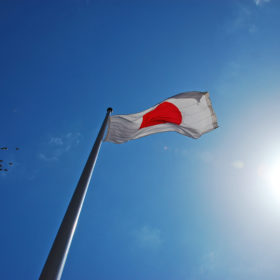
Japan: Disappointing first auction; plans for 200 GW solar by 2050
Japan’s first solar PV auction has reaped disappointing results, with just 41 MW set to be developed. Under the revised FIT, meanwhile, 27.7 GW were cancelled. Despite this, JPEA is aiming for 200 GW of solar PV installs by 2050. Overall, cumulative installed capacity has reached over 40 GW. There are still many plans afoot for large-scale projects, although it is the rooftop sector, which holds the most promise.
