
New York solar grows 795% in five years
The Empire State’s solar industry has attracted nearly $1.5 billion in private investment, putting its goal of producing 50% of its electricity from renewables by 2030 in reach.

World Bank mandates 500 MW of new solar capacity for Zambia
Zambian government signs agreement for the second tranche of the World Bank’s Scaling Solar program, which will support the construction of up to four solar PV plants in the country.

Florida Power & Light races to a solar future
After being part of a coalition that tried to slow third-party solar growth in the Sunshine State as recently as October, the state’s biggest utility announced plans to add eight new solar power plants by early next year.

100% by 2045 renewable energy bill introduced in California
The leader of the California Senate has introduced a bill that would put the state tied with Hawaii for the most aggressive renewable energy mandate in the nation, and one of the most aggressive in the world.

Greek PV installations grind to a halt in 2016
2016 was a bad year for Greece in terms of newly added PV installations, and this is not the only bad news. The country’s electricity sector is nearing disaster, following the government’s incompetent economic and electricity policies.

EU member states vote for 18-month extension to anti-dumping measures
The European Commission’s proposal to extend the anti-dumping measures for Chinese PV manufacturers by a year and a half has been put to the mediation committee. The final decision will be published on 4th March. A proposal to extend the measures by only 12 months also failed in the Appeals Committee.
GCL-SI signs Mexican distribution deal with DMSolar
GCL System Integration (GCL-SI) did not disclose the financial terms of the master distribution agreement, under which Guadalajara-based DMSolar will offer the Chinese PV maker’s components, as well as its GCL-P6/60 and GCL-P6/72 panels.

EPS, Toshiba to finish 3 MW Tasmania microgrid project in Q1
Paris-based Electro Power Systems (EPS) expects to commission the PV-powered project in the first quarter.
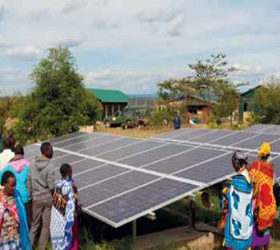
Developing countries leading the way in sustainable energy policies, finds World Bank report
In scoring the sustainable energy policies of 111 countries, the World Bank finds that nations such as Mexico, China, India and Brazil are emerging as leaders in the field, delivering robust policies that support energy access.

UK local authorities cite lack of Government support as main barrier to solar
A Freedom of Information request made by Korean giant LG Electronics has revealed that 47% of local authorities in the UK see the lack of Government incentives as a barrier to solar investment.
