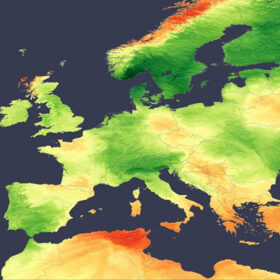
European Solar sees warm, cloudy end to winter, linked to record temperatures
In a new weekly update for pv magazine, Solcast, a DNV company, reports that in March most European solar operators and grids saw less solar irradiance and production than normal, due to enhanced westerly winds bringing moist air off a relatively warm Atlantic ocean. Large areas of the continent saw irradiance down 10% to 25% below normal for March.
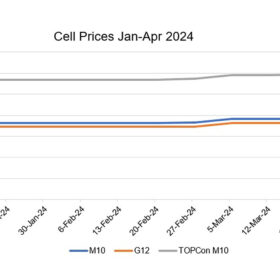
Solar cell prices fall for 3rd consecutive week
In a new weekly update for pv magazine, OPIS, a Dow Jones company, provides a quick look at the main price trends in the global PV industry.
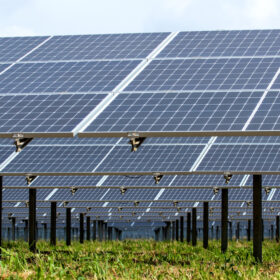
How can policy help Portugal decarbonize?
With ambitious decarbonization targets and a favourable regulatory landscape, Portugal is an appealing market for renewable energy developers and producers. Like other European markets, however, Portugal’s clean energy industry faces challenges related to permitting, grid connection, and the availability of remuneration schemes – hurdles which threaten to slow the country’s energy transition.

‘Attracting female talents is a plus for project development companies’
This week, Women in Solar Europe (WiSEu) gives voice to Chloé Durieux, Partner & CDO at France-headquartered solar developer Nexun. She says project development is a job that requires multitasking abilities, flexibility, teamwork, patience, and many more skills for women to make valuable contributions. Furthermore, she tells how she started her own new company with 80% of female workers.
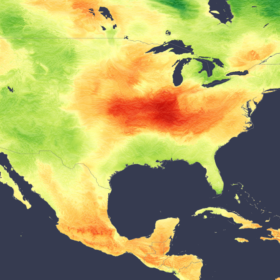
Mixed start to spring for solar in North America
In a new weekly update for pv magazine, Solcast, a DNV company, reports that the solar regions of California, Nevada, Arizona and western Texas saw lower than normal irradiance in March, while high irradiance levels were recorded from the midwest to the Carolinas and across most of Mexico.
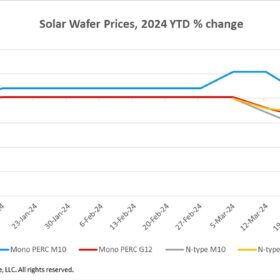
Solar wafer prices plummet, amid high inventory and low profit dominating the market
In a new weekly update for pv magazine, OPIS, a Dow Jones company, provides a quick look at the main price trends in the global PV industry.

‘During my career, I had to deal with many sexist attitudes’
This week, Women in Solar Europe (WiSEu) gives voice to Carolina Nester, Head of Operations Iberia at Sonnedix. She says one of the particular challenges women face is the perfectionism pitfall and self-confidence, which can lead them to be self-limiting and impact career development. Nester also explains that gender equality in management and board positions must be achieved and perceived as a natural development that begins in early career stages.
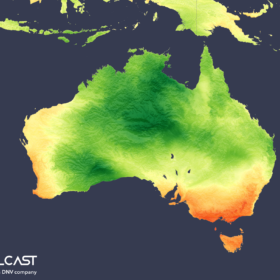
Australian solar evades clouds to perform in March
In a new weekly update for pv magazine, Solcast, a DNV company, reports that Victoria, Tasmania, Western Australia, and New South Wales were over-performing solar regions in March. This overperformance in the southeast and southwest came despite most of the Australian continent seeing below-average irradiance, due to thicker-than-usual clouds over the sparsely-populated interior and tropics.
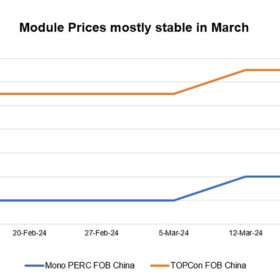
Solar module prices remain steady amid unchanged market fundamentals
In a new weekly update for pv magazine, OPIS, a Dow Jones company, provides a quick look at the main price trends in the global PV industry.

Environmental sustainability in PV technology advancements – life cycle assessment of PERC modules
As photovoltaic (PV) technologies evolve, understanding their environmental implications is crucial for a sustainable energy transition. IEA PVPS Task 12 analyzes the environmental impact of passivated emitter and rear cell (PERC) technology in PV installations in comparison to the monocrystalline silicon technology (AI-BSF) and the trend towards installing horizontal singla-axis tracker systems as opposed to fixed tilt systems. Primary data from one PERC and tracker manufacturer enable this study’s conclusions. Using the life cycle assessment (LCA) methodology, the study compares two locations in Italy with different irradiation patterns to evaluate the sensitivity to solar irradiation. The findings reveal that PERC technology and horizontal single-axis tracker systems demonstrate lower environmental impacts compared to Al-BSF and fixed tilt configurations.
