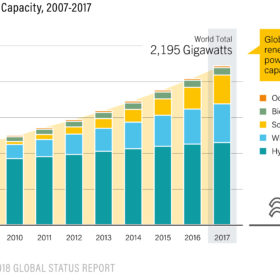
REN21 report: record PV growth but soaring energy demand leaves renewables playing catch-up
Renewable energy has made great strides in electricity generation but the integration of renewables in the heating, cooling and transport sectors is still in its infancy. With those sectors making up around two thirds of global energy demand, there is still enormous potential to harness PV and other technologies.

How Trump inadvertently proved solar and wind are the future
The Trump administration’s domestic energy policy has attempted a focus on strategic safety to support coal and nuclear – with apparently zero concern for long term viability or cost – while forgetting that the sun shines everyday.

China: 2018 installations could drop by more than a third
On Friday, three Chinese government ministries issued a joint “2018 Solar PV Power Generation Notice.” Its impact has been hotly debated since, with two key conclusions: the largest market segment – utility-scale PV – will take a pounding and not come close to last year’s record installation figure of just under 34 GW; and the expanding distributed generation market segment, which rose 360% from 2016 to 2017, will also be severely impacted by a 10 GW cap on new projects.
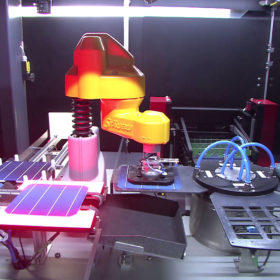
The European job
Energyra promises to be a lot of things: the first module maker to bring production back to the Netherlands; a manufacturer relying entirely on Made in Europe equipment and Dutch back contact solar cell technology; and a start-up betting on quality, innovation, automation, as well as high performance modules. pv magazine visited the company’s factory in Zaanstad, to get more detail on this ambitious project.
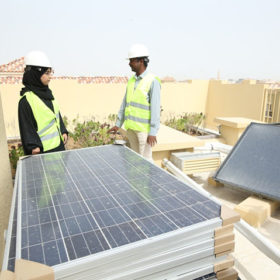
Dubai has 43.7 MW under net metering
Most of the capacity, around 27 MW, was deployed in the emirate over the past eight months.
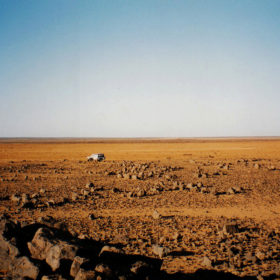
UN launches tender for 3.5 MW solar project to supply Palestinian refugee camps
Planned wheeling station will be backed to the tune of up to $8.5m by a private equity fund and is expected to be operational by July next year.
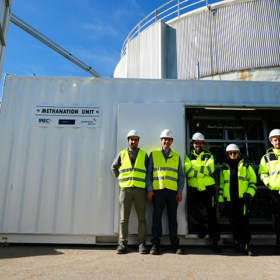
Gas Natural Fenosa launches power-to-gas project as advocates of the technology call for policy clarity
The Spanish power provider developed the pilot project with the Institut de Recerca en Energia de Catalunya and German spin-off Ineratec. Meanwhile, the European Power to Gas Platform has issued a paper demanding more regulatory certainty for power-to-gas, and to include it as an alternative in the cost-benefit analysis for grid extensions.
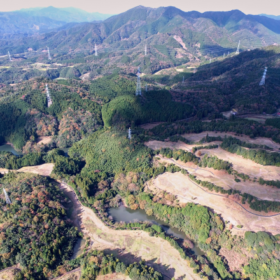
Solar becoming par for the course in Japan
LG’s 56 MW PV park is the group’s largest in Japan and will join the string of energy schemes feeding big data into the conglomerate’s Energy Optimization Center, when it opens this year.
The Weekend Read: Central Asia’s Green Horizons
Despite its huge potential in the region, solar PV has hitherto gained little traction in Central Asia. In Kazakhstan, two utility-scale PV projects have been realized, and a few are in the pipeline for Uzbekistan as it begins to attract international investors. But many challenges on the policy level have yet to be overcome.
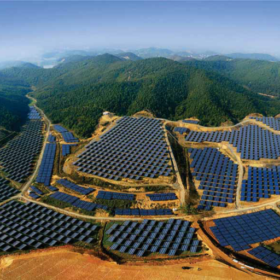
China releases new provisions for PV development in 2018
A notification released yesterday by China’s National Development and Reform Commission (NDRC), Ministry of Finance, and National Energy Administration (NEA) provides new regulatory measures for PV installations in 2018. Further details are as follows.
