
Saft unveils new modular battery for time-shifting applications
Saft, a unit of TotalEnergies, has launched a new LFP battery storage system that is optimized for time-shifting applications.
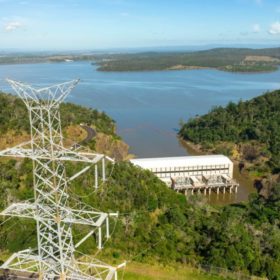
Australian state announces world’s ‘biggest pumped hydro scheme’
Annastacia Palaszczuk, the premier of the Australian state of Queensland, has launched a new plan to develop what could be the world’s biggest pumped hydro scheme.
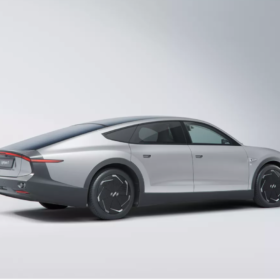
The mobility rEVolution: Lightyear 0 makes history as the world’s most aerodynamic production car
In other news, Our Next Energy reveals 240-Ah anode-free cell with high energy density, ABB E-mobility expands its manufacturing footprint in the US, and Volvo’s parent company Geely unveils 600 kW supercharging technology.
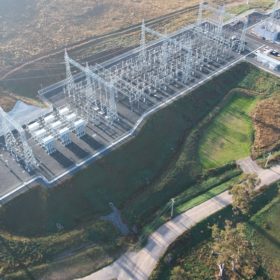
Australian grid operator turns to Smart Wires technology to unlock renewables
Transmission network operator Transgrid is counting on technology developed in the United States to increase the capacity for the bidirectional flow of energy between Australia’s most populous states with works on the Victoria to New South Wales Interconnector upgrade project nearing completion.
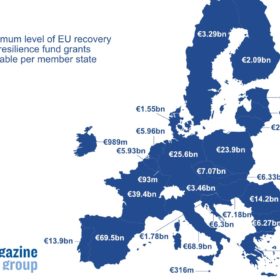
Greece readies €340 million grid-scale storage plan
Developers in Greece will bid to secure annual payments for large-scale storage facilities that must be operational before 2026.
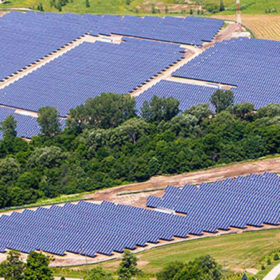
Renewables and storage developers bid to offer new power in Ontario
The Canadian province needs to commission 5 GW of newly-built electricity generation capacity to cope with demand driven in part by electric vehicles and nuclear energy retirements.
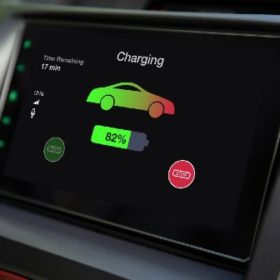
The mobility rEVolution: New tech cuts risk of electrocution from EVs
UK researchers have found a way to reduce the risk of electrocution with electric vehicles, while US utility Duke Energy said it is exploring how the Ford F-150 Lightning can serve as a grid resource. Chinese carmaker Geely posted disappointing first-half results, while IHS Markit said it expects strong uptake of battery electric vehicles in Europe through to 2030.
Growing consensus on 100% renewables
An international group of researchers from 15 universities has said that there is growing consensus among scientists that an energy system based on 100% renewables could be achieved cost effectively by 2050.
Study finds 100% renewables would pay off within 6 years
New research from Stanford University researcher Mark Jacobson outlines how 145 countries could meet 100% of their business-as-usual energy needs with wind, water, solar and energy storage. The study finds that in all the countries considered, lower-cost energy and other benefits mean the required investment for transition is paid off within six years. The study also estimates that worldwide, such a transition would create 28 million more jobs than it lost.
South Africa’s Eskom moves forward with 500 MW BESS initiative
South African utility Eskom has selected contractors for 343 MW of battery storage projects to be deployed in remote locations with limited access to distribution networks, but in proximity to large-scale renewables.
