Solar and wind integration crucial as Southeast Asia electricity demand grows
The International Energy Agency’s latest report says solar and wind energy are well placed to meet Southeast Asia’s growing electricity demand. It adds that while additional deployment will create flexibility challenges, most countries in the region can integrate more solar and wind energy without requiring major system changes.
Renewables overbuilding, proactive curtailment can reduce Europe’s energy system costs
New research from the Netherlands showed that renewables and short-term storage can meet around 92.5% of Europe’s electricity demand in future energy scenarios, with the remaining 7.5% being satisfied by green hydrogen. The scientists considered Europe as fully self-sufficient with zero import-export of power or hydrogen, with each of the 37 countries included in the modeling having a self-sufficiency rate of at least 80%.
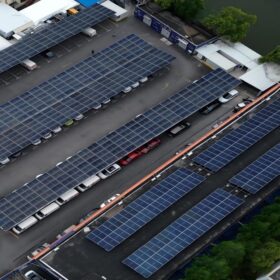
Optimization strategy for PV-powered EV charging stations relying on V2G
Scientists in China have created an optimization technique for an electric vehicle charging station that uses PV, battery storage, and a vehicle-to-grid operation. Considering the uncertainty of PV generation and the randomness of EV load, the system uses two-level optimization, day-ahead and intra-day.
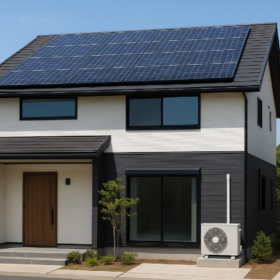
Making the business case for solar-plus-storage with heat-pumps in Japan
A Japanese research team has evaluated the affordability of photovoltaic-battery systems featuring heat-pump water heaters and air conditioning units across nine regions of Japan. They analyzed three price policies and two loan types, identifiying a tradeoff between net demand and cost according to the capacity of the solar-plus-storage system.

Hydrogen can mitigate curtailment in floating PV-pumped hydro energy storage systems
Scientists at Italy’s University of Cagliari explored the integration of a water electrolyzer with a floating PV-pumped hydro energy storage system. They found that under high curtailment conditions, hydrogen production helped to stabilize system efficiency and lower the levelized cost of electricity when compared to a system without the electrolyzer.

Powering ferries with floating PV, hydrogen
Scientists in Malaysia have conducted a techno-economic-environmental study of a green fueling system for a ferry that runs between islands in their home country. Using 40,000 solar panels, they were able to power two round trips round-trips per day. Annual CO₂ reduction was measured at 23.75 million kg.
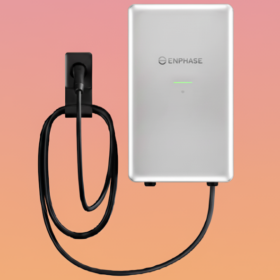
Enphase presents bidirectional EV charger
The microinverter company has disclosed details on the architecture of its IQ Bidirectional EV Charger, which will be available for sale in the second half of 2026. It is reportedly able to deliver up to 11.5 kW of bidirectional power.

The Cybersecurity gap in solar and how to close it
In recent months, solar energy has been recognised by the EU Commission as critical grid infrastructure, with a growing awareness around cybersecurity in particular raising questions about Europe’s energy security. In this article, solar cybersecurity specialist Uri Sadot – Managing Director at SolarDefend and Elected Chairman of SolarPower Europe’s Digitalization Group – discusses what PV installers, developers, EPCs and system owners can do to better protect themselves – and the grid.
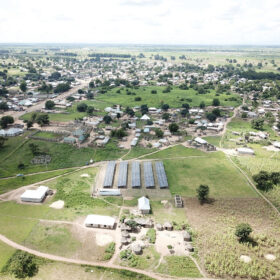
Digital transformation in off-grid solar: A comprehensive roadmap for practitioners
As off-grid solar systems expand to serve remote and underserved communities worldwide, digitalization has become a crucial need for efficient project development, implementation, and long-term sustainability. A new report from IEA PVPS Task 18 systematically explores digital tools across the entire off-grid energy project value chain, providing much-needed guidance for practitioners looking to optimize their operations.

Fraunhofer ISE defining test procedure for grid-forming inverters
The evaluation process, developed in collaboration with four German transmission system operators, has been carried out on seven European companies whose inverters range from kW to MW in size.
