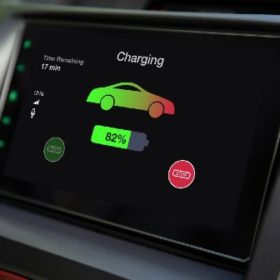
The mobility rEVolution: New tech cuts risk of electrocution from EVs
UK researchers have found a way to reduce the risk of electrocution with electric vehicles, while US utility Duke Energy said it is exploring how the Ford F-150 Lightning can serve as a grid resource. Chinese carmaker Geely posted disappointing first-half results, while IHS Markit said it expects strong uptake of battery electric vehicles in Europe through to 2030.
Growing consensus on 100% renewables
An international group of researchers from 15 universities has said that there is growing consensus among scientists that an energy system based on 100% renewables could be achieved cost effectively by 2050.
Study finds 100% renewables would pay off within 6 years
New research from Stanford University researcher Mark Jacobson outlines how 145 countries could meet 100% of their business-as-usual energy needs with wind, water, solar and energy storage. The study finds that in all the countries considered, lower-cost energy and other benefits mean the required investment for transition is paid off within six years. The study also estimates that worldwide, such a transition would create 28 million more jobs than it lost.
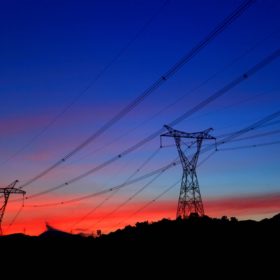
South Africa’s Eskom moves forward with 500 MW BESS initiative
South African utility Eskom has selected contractors for 343 MW of battery storage projects to be deployed in remote locations with limited access to distribution networks, but in proximity to large-scale renewables.

Solar auctions to replace feed-in tariffs in Kenya
Attendees at the Renpower Kenya clean energy event in Nairobi were told there will be a changeover in incentive schemes in 2022 with mature technologies no longer benefiting from fixed payments.
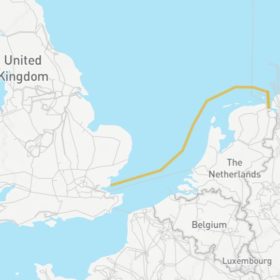
Project to build 1.4 GW high-voltage cable linking Germany with the UK moves forward
The European Investment Bank has agreed to provide €400 million ($406.5 million) in funds for the €2.8 billion project. Construction on the infrastructure should begin by the end of this year.
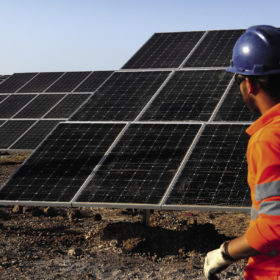
Clean power prices leap on back of tightening gas supply
Developers are making hay as far as PPA prices are concerned thanks to eye-watering wholesale electricity prices which mean they can just sell their solar and wind power on the open market.

Tennet to build 40 new high-voltage stations in the Netherlands
The Dutch transmission system operator said that more grid capacity is needed to address the continuous growth of wind and solar energy, as well as that of electromobility and heat pumps.

Netherlands to build 10 GW national network for green hydrogen
The Netherlands is planning a €1.5 billion ($1.6 billion) green hydrogen network that will consist of 85% recycled natural gas pipes. It is expected to go online in 2027.
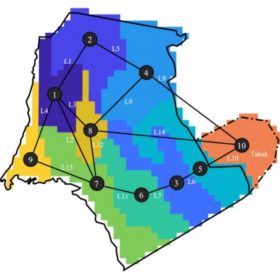
Renewables desalination for Neom City
The futuristic Neom City will be powered exclusively by renewable energy, but a co-optimization approach with the water sector will be crucial for desalination and sustainable water supplies. Saudi scientists have assessed different system configurations and determined that solar-plus-storage would deliver the lowest levelized cost of energy.
