Grid connection is key culprit as investor confidence wanes in Australia
Ongoing grid connection issues and concerns about Australia’s unpredictable regulatory and policy environment have been identified as the key culprits with a new report revealing investor confidence in the nation’s renewable energy sector has slumped to a five-year low.
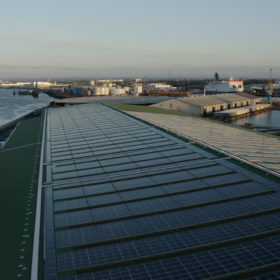
China set to mandate solar on at least 20% of residential roofs in pilot counties
State body the NEA has given its provincial offices until July 15th to suggest counties where a solar mandate – which rises to at least half of all government roofspace – can be rolled out. Selected companies will be awarded whole-county contracts.
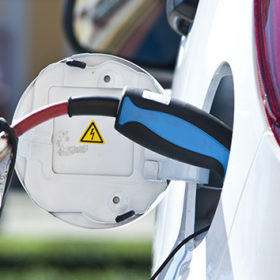
Netherlands licenses first EV smart charging company to provide grid services
The NewMotion electric vehicle (EV) charging business owned by Anglo-Dutch energy giant Shell has become the first such entity to obtain a licence to provide grid balancing services in the Netherlands. Dutch grid company Tennet has licensed NewMotion to provide megawatt-scale balancing services to maintain grid frequency at 50 Hz by varying the rate at […]
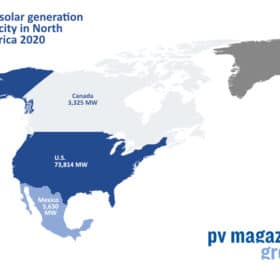
Electrification could drive 51 GW of solar in Canada by 2050
And that figure is based on a less ambitious climate change policy than the one Ottawa has committed to since the North American Renewable Integration Study started, in 2018.
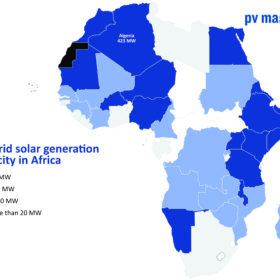
East African renewables developers and investors need matchmaking
Lack of grid capacity and renewable energy institutions are a common lament in sub-Saharan Africa but there is no lack of cash to invest, nor eligible projects in East Africa, as a recent event heard; the problem lies in marrying the two.
Industrial green hydrogen could become a global commodity but local production is needed for transport uses
Long distance, point-to-point transport of green hydrogen for industrial use can harness the cheap solar electricity available in some parts of the world but distributing the energy-storage gas to individual refueling stations, for vehicle fuel cell use, will likely have to depend on production nearby.
Dutch grid company notifies further lengthy bottlenecks
The final 980 MW of transmission capacity in parts of the Friesland regional grid have been allocated to generation projects, and state-owned network business Tennet says bottlenecks could occur over the next seven years.
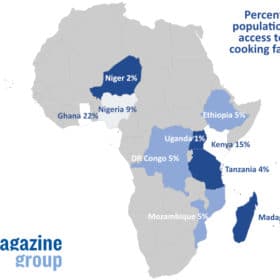
Universal electricity access by 2030 remains a distant dream
Energy efficiency, electrification of heating and transport, and the provision of clean cooking facilities are all going in the wrong direction as the Covid crisis deprived millions in sub-Saharan Africa of electricity use, according to a report by the IEA, IRENA, WHO, World Bank and UN Statistics Division.
Tennet begins internet-of-things grid balancing project
Household heat pumps, EV chargers and rooftop solar panels will be able to earn their owners benefits in return for helping to balance grid networks struggling to accommodate new solar and wind power generation.
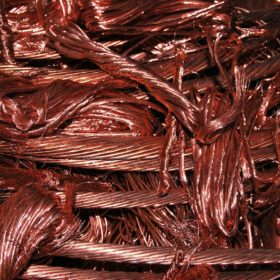
IEA highlights solar’s dependence on Chinese copper processing
The sheer volume of new power lines which will be required to accommodate the rising tide of solar installations ensures copper has been included by the International Energy Agency on its list of minerals which must keep flowing if the energy transition is to stay on course. And it’s not production that’s the potential bottleneck.
