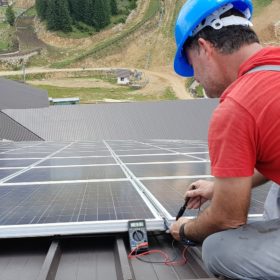
Live fast, die young: MIT study proposes use of 10-year panels
Research has found even short-lived, 10 to 15-year solar panels could provide enough return for bankable projects. The researchers believe panel costs, coupled with an industry mindset now fixed on the final solar energy price rather than costs per kilowatt installed, may open opportunities for PV products currently snubbed because of a short lifecycle.
Siemens and TIES to open battery research center in China
The facility is set to open this year and will offer battery suppliers digitalization research and manufacturing consulting. Smaller manufacturers will be able to use shared laboratories for research.

Mongolia tenders 10 MW solar plant
The project, planned for Khovd in the west of the country, is being developed with the support of the World Bank.

Solar, renewables and hydrogen for greener marine transport
A new report in Sweden suggests that renewables are an ideal source of power for marine vessels, based on a case study in which solar PV and proton-exchange membrane fuel cells, combined with a diesel generator, were used to reduce the greenhouse gas and particulate emissions of cruise ships by almost 10%.

UK scientists find way to cut down indium
A research team led by the University of Liverpool has developed a transparent conductive oxide material to replace tin with molybdenum. The results demonstrated better performance and potentially lower material costs than the transparent conducting layers used in today’s commercial solar cells.

Mexico may resume cancelled energy auction
Energy minister Norma Rocío Nahle García yesterday announced the tender round believed to have been cancelled in January had merely been held up by the inability of power lines to cope with new generation capacity. The minister added, expanded nuclear capacity is under consideration.

A common language for bifacial PV
This week pv magazine was in Amsterdam for the sixth edition of the BifiPV workshop, where the discussion focused on the impressive achievements made by bifacial solar modules and the challenges the technology faces as it moves toward mainstream adoption.
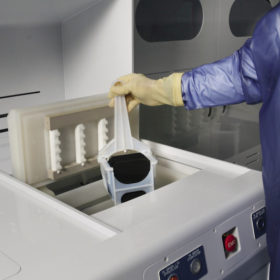
The blackest black for more efficient solar cells
MIT scientists claim to have created a material 10 times more black than anything witnessed to date. It is said to be able to absorb more than 99.96% of incoming light and reflect 10 times less light than other superblack materials. The invention may be interesting for the development of black silicon PV technology and carbon nanotube-based solar cells.
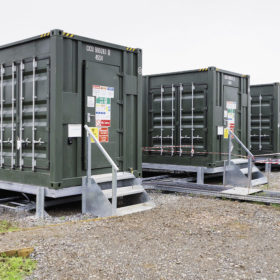
Solar-plus-storage vs grid enhancement, part IV
Co-location of solar and storage may accelerate the deployment of profitable merchant renewable energy projects in the United Kingdom, according to a report by Aurora Energy Research. The study predicts installed solar capacity in the U.K. may increase from around 13 GW next year to 19 GW in 2030 and 32 GW in 2040.

‘The world has no chance of beating climate change if natural gas is part of the mix’
A report by Germany’s Energy Watch Group thinktank has said we would be better off sticking to coal and oil than switching to gas because emissions of methane, the most potent greenhouse gas, caused by gas extraction render any related carbon savings irrelevant.
