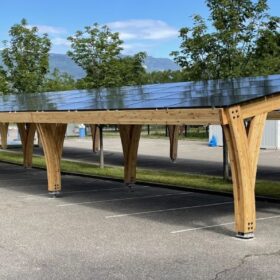
Timber framed solar carports for residential, commercial applications
Sweden-based Innoventum has launched a solar carport line equipped with bifacial modules in a larch wood structure. The solution may include electric vehicle charging, energy storage, LED lighting, and inverter systems.

Dutch hackers report flaws in Enphase IQ Gateway devices
Two “ethical” hackers from the Dutch Institute of Vulnerability Disclosure (DIVD) have identified six vulnerabilities in Enphase IQ Gateway devices. The researchers are now working with the US inverter manufacturer to address the bugs in the next version of the product.
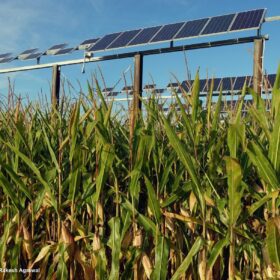
Assessing viability of agrivoltaics in corn fields
Researchers from Purdue University have studied the impact of traditional photovoltaic systems and agrivoltaics deployed in corn croplands. They conclude agrivoltaics could offer a viable strategy to ease the current tradeoff between energy production, greenhouse gas emissions, food production and farm profitability.
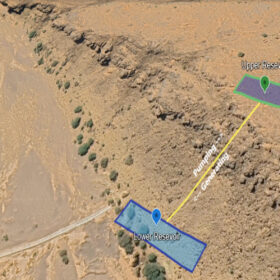
Combining hybrid wind-solar with pumped hydro in rural electrification
Scientists in Morocco have evaluated how hybrid wind solar plants may be combined with pumped hydro storage to power remote rural areas. The proposed system was found to have an LCOE $0.03831/kWh and a 86% use factor.

The effects of wind on single-axis PV trackers
Scientists in South Africa have conducted full-scale research on the effect of wind load on PV panel mounting rails for more than 100 days. Compared to standard design codes, they found lower combined wind load coefficients. Maximum loads occurred for an easterly wind direction.
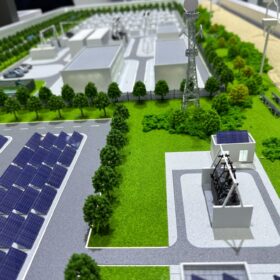
Are batteries the best option for energy storage?
While other options exist, lithium-ion batteries are becoming the preferred way to store energy from renewable energy sources, with the help of IEC Standards.
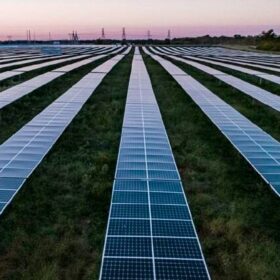
Maximizing solar efficiency through bifacial tracking systems
The solar energy industry continues to innovate, striving to improve the efficiency and reliability of photovoltaic systems. One of the most promising advancements is the development of bifacial modules combined with tracking systems. These technologies aim to capture more sunlight and convert it into electricity, making solar energy more effective and affordable. IEA PVPS Task 13 is at the forefront of this innovation, working to enhance the performance and reliability of PV systems. This article explores the concept of bifacial tracking, its advantages, challenges, market developments, and the significant contributions of IEA PVPS Task 13.
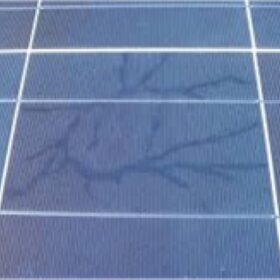
Low-cost machine learning framework for snail trail detection in PV panels
Conceived by French scientists, the novel system uses ensemble learning and does not require anything more than a commercially available optimizer. Before it makes a decision, the method combines K nearest neighbors, support vector machine, and decision tree learning. Accuracy is reportedly up to 89%.
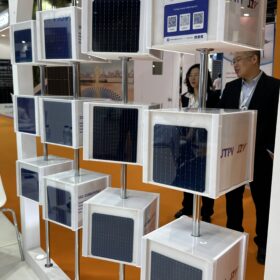
Scientists estimate material demand for all silicon PV module technologies by 2050
Dutch researchers used dynamic modelling to uncover the demand for silicon-based PV materials used in a wide range silicon PV technologies, including perovskite-silicon tandem and back-contact modules. The model included calculating the impact of advances in module efficiency and material intensity, as well as circular closed loop recycling.
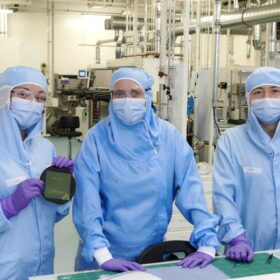
CEA-INES, Enel achieve 29.8% efficiency for tandem perovskite-silicon solar cell
The 9 cm² cell consists of a top cell based on a perovskite absorber and a bottom cell with a heterojunction (HJT) structure. The results improve on the 28.4% efficiency CEA and Enel achieved for the same kind of cell in December.
