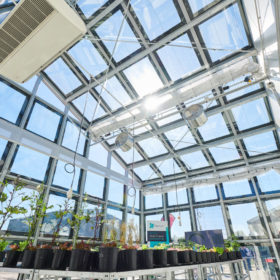
Solar greenhouse trials perform better than expected, proving commerciality company says
The results from solar glass company ClearVue’s greenhouse trials at Murdoch University have found the company’s product performed better than predicted overall, demonstrating both strong power generation and thermal value.
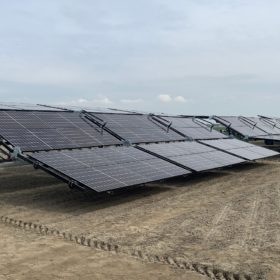
Mobile agrivoltaic system from the Netherlands
Created by a Dutch group of companies and research institutions, the mobile solar system may also be combined with an electrolyzer for hydrogen generation. Two prototypes are currently being tested by a farmer and a research institute in the Netherlands.
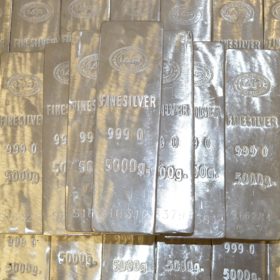
Silver prices rose 22% in 2021, but slight decrease expected this year
The US-based Silver Institute’s “World Silver Survey 2022” report shows that the price of the metal will fall slightly this year, despite the global economic impact of the war in Ukraine.
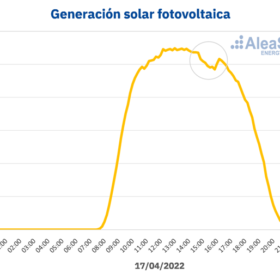
Spain curtails PV for first time
The Spanish authorities applied solar curtailment for the first time on Easter Sunday, when power generation exceeded demand and the wholesale electricity price went from €168.50 ($182)/MWh to just €3.70/MWh.
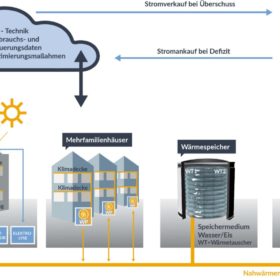
District heating via solar-powered heat pump using industrial waste heat
The Fraunhofer Institute for Solar Energy Systems is assessing how a solar-powered heat pump system that uses waste heat from a distillery at a low-temperature level could be used to provide district heating. Waste heat is injected into an ice storage tank, to which heat pumps are connected on the source side.
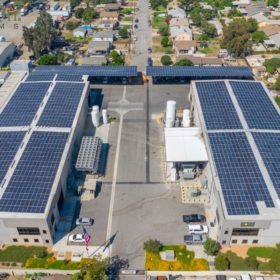
Three-year commercial PV payback expected via roof mount cost reductions
Solar Atmospheres says a 772 kW PV solar array, installed on S-5! metal roofing mounts, and a 1,561 kW/3,122 kWh Tesla battery storage system will help it to meet its varying energy demands.

Natural hydrogen – how it works and why companies are interested
Natural hydrogen is piquing interest. Sometimes referred to as “gold” or “white” hydrogen, natural hydrogen plants offer smaller carbon footprints than sprawling green hydrogen projects, with faster development times, according to Avon McIntyre, executive director of HyTerra.
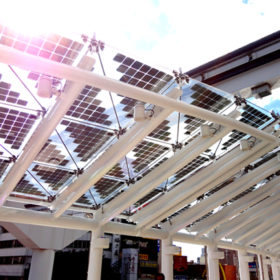
Glass-integrated BIPV module from Japan
Japanese glass manufacturer AGC has developed a building-integrated PV (BIPV) panel for different building requirements. It can be installed on facades, canopies, and curtain walls where normal glass can be placed.
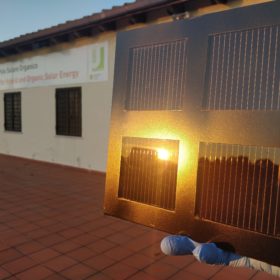
Mini perovskite solar module with 11.9% stabilized efficiency
An international research group has developed a perovskite solar panel on a 192 square-centimeter surface. The researchers claim the panel has one of the highest efficiencies reported at this size to date.
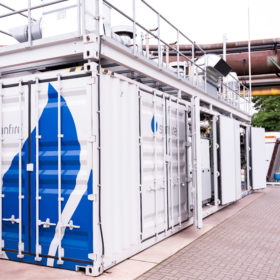
The Hydrogen Stream: Salzgitter claims record efficiency for largest high-temperature electrolyzer
Salzgitter has claimed a record efficiency level for its EU-funded GrInHy2.0 hydrogen project, which is based on solid oxide electrolysis cell tech. The high-temperature electrolyzer uses waste heat from the company’s steel production processes.
