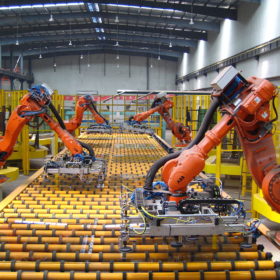
Alliaverre to produce solar glass in France
Alliaverre wants to move a 600 MW solar glass plant to Amiens, France, to reduce European customer delivery times, as it faces rising shipping prices and manufacturing constraints in Asia.
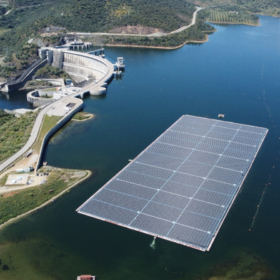
Storage-linked 5 MW floating PV plant goes online in Portugal
Portuguese utility EDP has switched on a new 5 MW floating solar array at the Alqueva hydropower dam.
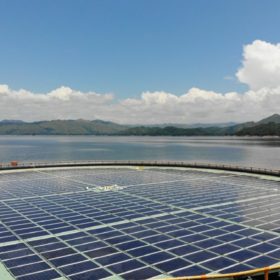
Small-scale floating PV with pumped hydro storage
Indian scientists have developed a system under which a pumped-hydro facility stores grid electricity during off-peak hours by pumping water to an upper reservoir. During peak hours, the system feeds the load, rather than taking power from the grid.

Heat-storage building material to passively cool PV systems, batteries
German researchers have developed a new shape-stabilized phase change material with the ability to store up to five times more thermal energy than commercially available PCMs.
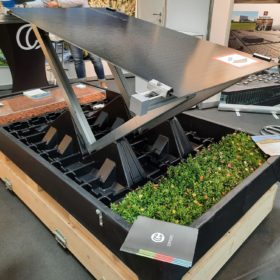
Smarter E products at a glance
pv magazine summarizes the products we covered at the recent Smarter E exhibition, in the first of a series of reports on all of the new releases from the annual trade fair in Munich, Germany.

BIPV facade for new exhibition space in Switzerland
Switzerland-based Novartis has deployed a 36 kW building-integrated PV facade on its new exhibition center in Basel. The system features 10,680 organic PV modules from France’s Asca.
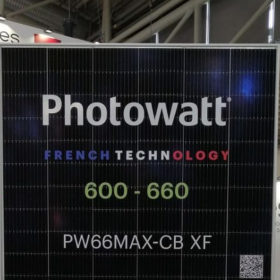
Photowatt unveils G12 solar modules
Photowatt’s new bifacial modules rely on 132 half cells, measuring 210 mm, with power outputs of 600 W to 660 W. The new products will be available from early 2023, with about 40 MW of orders already booked.
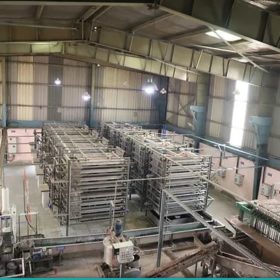
Emissions-free battery recycling facility will use electricity rather than smelting
ACE Green Recycling has announced plans to build a new plant in Texas to recycle both lead-acid and lithium-ion batteries.
The Hydrogen Stream: Carbon-coated nickel anode to solve problems of hydrogen fuel cell without precious metals
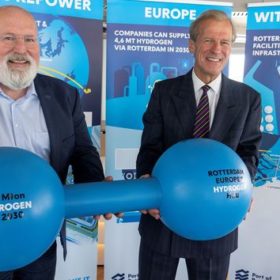
A team of researchers from the University of Wisconsin-Madison, Cornell University, and Wuhan University have presented a completely precious metal–free alkaline fuel cell with enhanced performance using a carbon-coated nickel anode. Meanwhile, the Port of Rotterdam has offered to supply northwestern Europe with 4.6 million tonnes of hydrogen by 2030. According to RMI, Europe will import green hydrogen between 2024 and 2030. RenewableUK sees room for hydrogen exports from the UK to the EU.
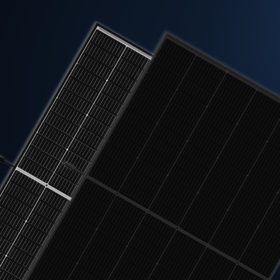
Smarter E Products: Trina Solar showcases G12 solar modules for rooftop applications
All the products rely on the company’s 210 rectangular silicon wafer (G12R) cell technology. The manufacturer claims these new products can increase the installed capacity of residential roofs by 5-7%. The largest panel is a 21.5%-efficient device with a power output of up to 580 W and the smallest features an efficiency of up to 21.3% and a nominal power of up to 425 W.
