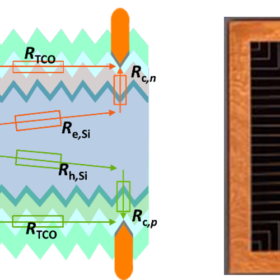
Bifacial heterojunction solar cell with 22.84% efficiency, reduced indium consumption
A Dutch-Chinese research team has developed a bifacial heterojunction PV cell with a 67% reduction in transparent conductive oxide (TCO) use. The TCOs used for the cell are based on indium(III) oxide (In2O3), which is considered a technology-critical element by many experts.
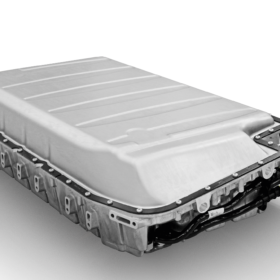
Italian solar park to be linked to 5MW/10MWh of second-life batteries
A unit of Enel plans to deploy 5MW/10MWh of second-life batteries at Rome-Fiumicino International Airport, where a 30MW solar park is now under development. The modular storage system will include different second-life lithium-ion batteries, mainly based on nickel, manganese and cobalt chemistry, with usable storage capacity ranging from 10kWh to 25kWh.
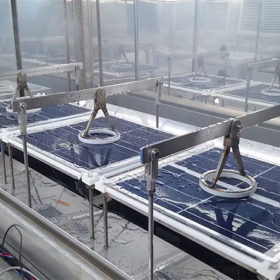
US consortium aiming for 50-year PV
The US Department of Energy’s durable materials consortium is a multi-laboratory unit that stress-tests solar modules for durability. It aims to extend the useful life of PV.
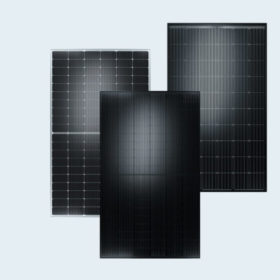
Solarwatt is the first solar module manufacturer enabling carbon compensation
The company’s German customers can buy, together with the modules, CO2 certificates so that the products are completely neutral. According to the manufacturer, the additional costs are about €11 per module.
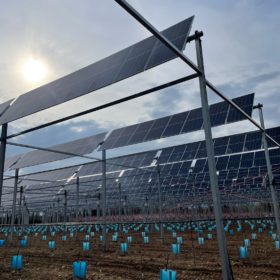
Agrivoltaics for stone fruits
French specialist Sun’Agri is developing a pilot project to combine solar power generation with the cultivation of peaches, apricots, and cherries.
Canadian Solar launches 420W rooftop solar module with 21.5% efficiency
The new product is part of the company’s HiKu6 series based on 182mm wafers. Its temperature coefficient is 0.34% and its electrical characteristics are claimed to be compatible with the most common photovoltaic inverters thanks to current values below 14A.
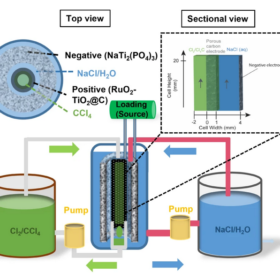
Membrane-free chlorine redox flow battery for stationary storage
A US-Chinese research group has developed a full chlorine membrane-free redox flow battery that is claimed to achieve a round-trip energy efficiency of 91% at 10 mA/cm2 and an energy density of 125.7 Wh/L. The device is based on an aqueous electrolyte made of sodium chloride (NaCl) which uses chlorine (Cl2/Cl−) redox couple as the active material for the positive electrode.
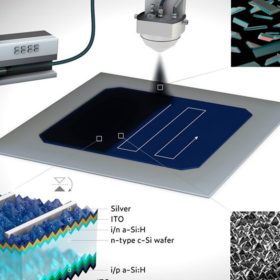
KAUST researchers achieve 20.1% efficiency in heterojunction solar cell based on 2D MXenes electrodes
The solar cell is based on the titanium carbide MXene and is claimed to have retained around 99% of its initial efficiency for more than 600 days of ambient air storage. The device was built using spray coating to directly deposit the titanium carbide flakes on the cell’s rear side.

Paving the way for green hydrogen certification
The International Renewable Energy Agency has outlined a series of technical considerations for green hydrogen tracking systems. According to the document, a degree of flexibility should be taken into account in the short term to ensure that the nascent green hydrogen market can develop.
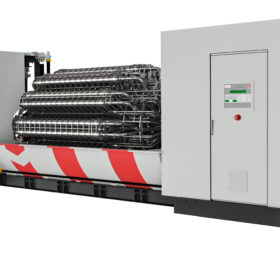
Rotation heat pump for industrial applications
Austrian tech company ecop has developed a rotation heat pump with a reported coefficient of performance (COP) of 4.0 – 7.0. The 700 kW machine operates under temperatures of 150 degrees Celsius and is based on an anticlockwise running Joule process, during which there is no phase transition of the working medium that always remains gaseous.
