
Cybersecurity for distributed energy, inverter-based resources
UL and the US National Renewable Energy Laboratory have released a report on cybersecurity certification recommendations and are actively developing new requirements to create cybersecurity certification standards.
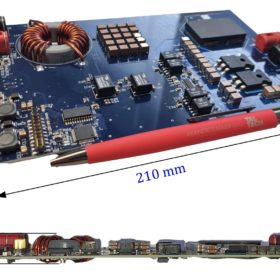
Novel power electronic converter for BIPV
Conceived by researchers in Estonia, the device is claimed to be compatible with both crystalline silicon and thin-film BIPV panels and to manage, easily, different voltage levels. It can be applied either in solar facades or BIPV rooftop arrays.
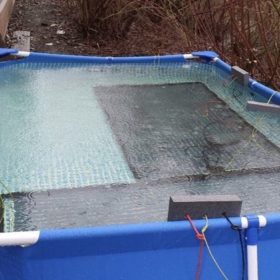
Submersing modular raft for floating photovoltaics
Developed by a Dutch consortium, the Hide and Shine Floating Solar (HAS FPV) technology is claimed to be extremely resistant to storms and harsh weather conditions. The modules can be submerged totally or partially and, in case of a severe storm, they can be submerged up to two meters below the surface.
Solar parks could help to increase rainfall in arid regions
New modeling suggests that the reduction in albedo caused by large-scale solar plants could double rainfall in the Red Sea coastal plain of Saudi Arabia.
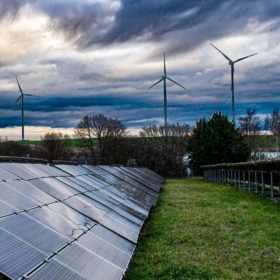
Subsidies, interest rates, carbon prices could disrupt renewables expansion
German and Swiss researchers have published a new study that questions the idea of a continual decrease in renewable energy costs, given the reality of rising interest rates and higher carbon prices. They outlined a scenario in which interest rates could rise by up to 5% and public incentives for renewables would be gradually phased out. This could result in a loss of 535GW of new renewables capacity, compared to a scenario in which interest rates remain at current levels.
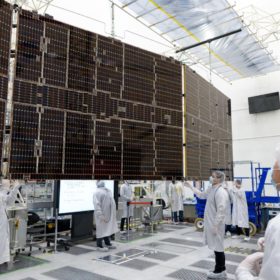
Psyche asteroid mission will be PV-powered, says NASA
NASA has said that it will explore a large, metal-rich asteroid with a remotely operated craft powered by two cross-shaped solar arrays.
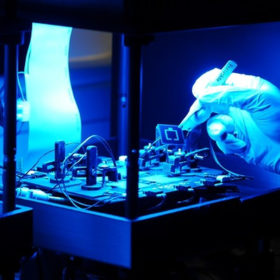
Hanwha Q Cells, Helmholtz-Zentrum Berlin claim 28.7% efficiency for 2T perovskite-silicon tandem solar cell
The Korean manufacturer and the German research center were able to improve the performance of their jointly developed tandem solar cell by almost one percentage point.
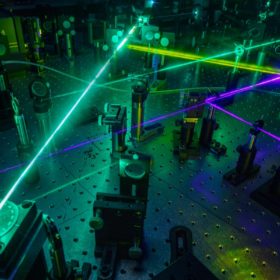
Terahertz, microwave spectroscopy for more accurate PC cell assessments
A German research group has used spectroscopic methods based on terahertz or microwave radiation and has discovered that they might help with more precise assessments of the characteristics and performance of solar cells. Their proposed approach purportedly enables the evaluation of maximum possible efficiency levels for emerging materials such as perovskites in solar cells.
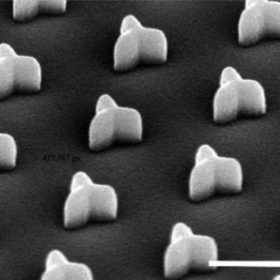
Spectrum splitters to raise efficiency of perovskite-silicon tandem solar cells
Researchers in Canada have conducted a series of simulations to understand how spectrum splitters may raise the efficiency of two-terminal tandem solar cells and have found that efficiency gains may be of up to 6%. The proposed cell configuration was also found to be economically competitive.
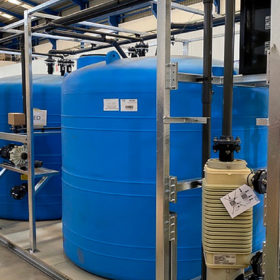
Hybridizing PV, redox flow batteries and geothermal heat pumps
A Spanish consortium is equipping one of Madrid’s largest metro and bus stations with a hybrid system that combines PV, geothermal pumps, and vanadium redox flow batteries to provide cooling and heating.
