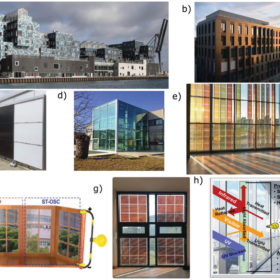
Tunable solar cells with customized design capabilities
German scientists have reviewed all solar cell technologies with tuning capabilities and have identified all of their possible applications.
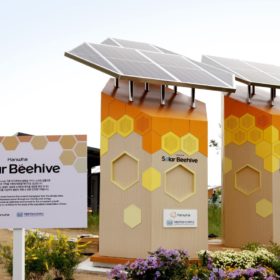
Solar beehive in South Korea
Hanwha Group has marked World Bee Day by unveiling the country’s first solar beehive. The PV modules on the beehive generate electricity to automatically monitor and control internal conditions.
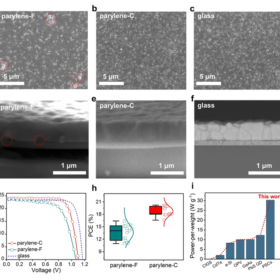
Ultra-thin inverted perovskite solar cell with 20.2% efficiency
Chinese scientists have developed an ultralight solar cell with perovskite film based on a 3-µm-thick polymer. It purportedly has a power conversion efficiency in line with that of perovskite cells of conventional thickness.
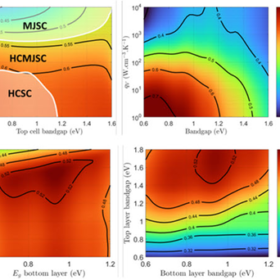
Reaching beyond efficiency limits
An international group of scientists experimented with a concept known as a “hot junction” carrier cell, which holds the potential for efficiency beyond the theoretical limits assumed today. The group modeled various cell designs, seeking those that would be least affected by imperfections in the actual materials, compared to how they are modeled.

Downsizing gallium nitride inverters
A German consortium led by Fraunhofer IEE aims to bring gallium nitride inverters closer to commercial viability. The primary goal of the research project is the optimization and miniaturization of inverters, including passive components such as cooling systems, casings, and mounting structures.

Redflow announces integration with US inverter company
Australian redox-flow battery specialist Redflow has upped the ante on its plans to expand into the US market, announcing that it has completed testing to pave the way for its battery energy storage system to be used in conjunction with hybrid inverters manufactured by US solar engineering company Sol-Ark.
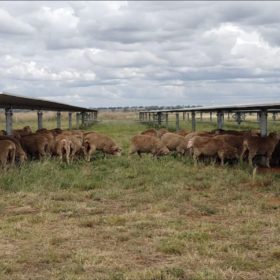
Solar panels and sheep grazing
Two Australian farmers say their solar panels increased grazing quality during droughts over a four-year period, aligning with research suggesting that solar panel microclimates might increase water retention and grass production.

The Hydrogen Stream: World’s first hydrogen-powered towboat
Shipbuilder Hermann Barthel has developed the world’s first push boat to combine battery-electric propulsion with hydrogen and fuel cell technology. Iberdrola and Fertiberia, meanwhile, have commissioned Europe’s largest green hydrogen production plant.
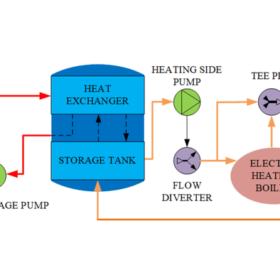
PVT-biomass system for space heating in small homes
A US-Chinese research group has developed a hybrid system proposal based on photovoltaic-thermal (PVT) modules, a heat pump, a backup electric boiler, and biomass generating units. They say it could be used as space heating in a single-floor home.

Storing hydropower via regenerative braking in electric trucks
An international research team has proposed the use of water from high-altitude rivers and regenerative braking in electric trucks to store electricity for reuse in power networks, or for transport purposes.
