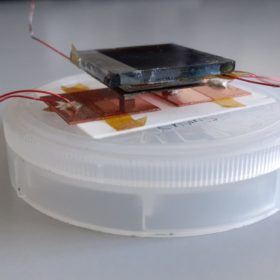
Recovering waste heat from solar cells via a thermoelectric generator
Scientists in Italy have created a hybrid thermoelectric photovoltaic (HTEPV) system based on a thermoelectric generator and a wide-gap perovskite solar cell. The device is able to recover waste heat from the PV unit and produce additional power. According to its creators, this configuration needs large gap cells as these are less sensitive to temperature in terms of efficiency
Current affairs
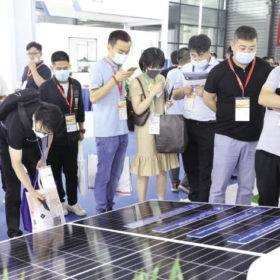
A new white paper published by Chinese module giant JA Solar examines the performance of new large format modules, and compares products based on the two different wafer sizes, 182mm and 210mm, that are set to dominate the market for the coming years. Thanks largely to the impact of very high currents present in the larger of the two options, JA Solar finds that the 182mm products offer a slight advantage in performance. Further, JA notes that any further increases in size would come with more risk than reward, and calls on the industry to return its focus to reaching higher cell efficiencies and yields through new materials and innovations.
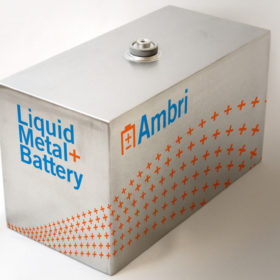
US start-up secures $144 million for liquid metal battery commercialization
Ambri plans to commercialize its calcium-antimony liquid metal battery chemistry and open manufacturing facilities to deliver projects in 2023 and beyond.

The Hydrogen Stream: Russia unveils hydrogen strategy, Germany provides more funds for power-to-X
ThyssenKrupp has also said it is working on a green hydrogen and ammonia project in the Emirates and three U.S. companies are planning to develop low-cost renewable hydrogen generation for use in transportation and distributed energy applications.
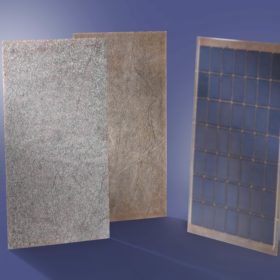
Facade BIPV modules designed with stone veneers
Developed by a German group of scientists, the panels are considered an ideal solution for aesthetically demanding applications in buildings with stone facades. Although their power yield is more than halved compared to conventional modules, the modules can also be used as partial shading walls or semi-transparent roof elements.

Harnessing heat loss with thermionics
Scientists in Canada evaluated the potential of a lesser-known approach to boosting solar generation efficiency. Thermionics uses heat from the sun to generate electricity, and could be combined with photovoltaics to create devices with better than 40% efficiency from a single junction. In their evaluation, the scientists find promising pathways for further research, despite a mountain of challenges that will need to be overcome.

Double-layered anti-reflective coating for heterojunction solar cells
South Korean scientists have developed a novel coating that purportedly reduces average cell reflectance and significantly increases short-circuit current. The coating is based on aluminum oxide and indium tin oxide.

Hyundai and UL ally to give EV batteries a second life
The two agreed to advance safe deployment and use of second-life battery energy storage systems.

Agrivoltaics for rabbit farming
U.S. scientists have developed a new way to combine PV generation and rabbit farming. They claim their new approach to agrivoltaics produces lower emissions and uses less energy than non-integrated methods.
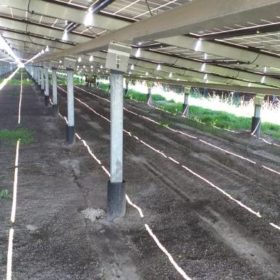
Novel design for east-west solar parks reduces soil deterioration
Researchers from the TNO in the Netherlands have proposed two novel east-west PV plant designs that are claimed to increase soil quality underneath the solar panels. Both approaches are said to provide a 77% ground coverage ratio, which compares to a 90% ratio in conventional east-west oriented projects.
