
Italy notches 212 MW/333 MWh of distributed storage capacity, adding 22.5MW/37.9 MWh in Q1 2021
The country added around 22.5 MW/37.9 MWh of new, small-sized storage capacity in the first quarter of 2021.
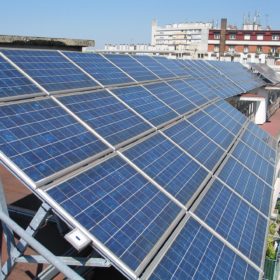
India offers fastest energy payback for rooftop PV: 0.44 of one year
The energy payback time of a silicon PV rooftop system mounted in India is only 0.44 of one year (160.6 days), compared to 0.53-0.67 years in Africa, 1-1.3 years in Europe, and 1.42 years in Canada, as revealed by a world map by German research body the Fraunhofer Institute of Solar Energy Systems (ISE). For the calculation, the report authors considered the installation used a typical, Chinese-made, 60-cell, PERC, 19.9%-efficient solar module.

Solar-powered large scale microbial food production
Producing nutrient-rich microbes with solar PV has the potential to produce more food with fewer resources, according to a German research group that modeled the large-scale production of microbial biomass by combining ground-mounted photovoltaics, air, water, and nutrients.

Bringing water to 273 farmers with just 90 kW of solar pumps
Two solar water pumps installed by the Philippines’ National Irrigation Administration (NIA) will cover a total area of more than 500 hectares.
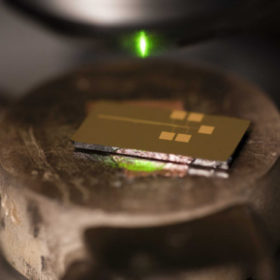
Australian researchers go round the twist with latest ultra-thin solar discovery
Researchers at The Australian National University working on the photovoltaic potential of ultra-thin 2D materials have made an interesting discovery, the ability of these diaphanous materials to generate solar energy can be controlled by a mere “twist”.
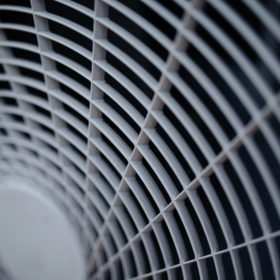
Integration methodologies for solar-assisted heat pumps
Italian scientists have assessed the technical potential of vapor compression heat pumps assisted by photovoltaic-thermal systems. They analyzed two main configurations of this combination describing the advantages and disadvantages of both solutions. The cheapest and easiest to deploy system is a single-source direct-expansion (DX) configuration for hot water for space heating or domestic hot water.
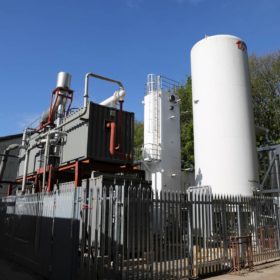
A closer look at liquid air energy storage
A British-Australian research team has assessed the potential of liquid air energy storage (LAES) for large scale application. The scientists estimate that these systems may currently be built at a cost between €300 and €600 per kilowatt-hour and that a positive business case could be favored by certain conditions, including a determined price structure in the energy market and the presence of a grid unable to support high levels of renewable energy penetration.
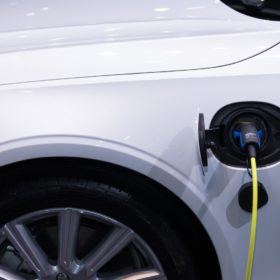
Residential PV makes EVs cheaper, reduces emissions
The maintenance cost of an electric vehicle is estimated to be significantly lower than internal combustion engines, and studies show home solar furthers the cost savings and boosts carbon emission reductions.

The weekend read: Don’t be afraid of BIPV
Necessity, as it’s said, is the mother of invention. For architect Samira Jama Aden, who plays a central role at Helmholtz-Zentrum Berlin’s BAIP consultancy for building-integrated photovoltaics (BIPV), the need for solar to be part of our built environment is becoming unavoidable. And for Aden, her mission is personal.

Tesla sells Maxwell Technologies but dry cell tech for lithium-ion batteries retained
Tesla acquired the Californian supercapacitor maker in 2019, leading some to speculate its EVs would use ‘supercaps’ for top acceleration. Two years on, it appears Elon Musk has moved on and sold Maxwell to UCAP Power, but Tesla has retained the company’s dry electrode tech.
