
Using the oceans’ depths to store renewables, compress hydrogen
Underwater gravity energy storage has been proposed as an ideal solution for weekly energy storage, by an international group of scientists. The novel technology is considered an alternative to pumped-hydro storage for coasts and islands without mountains that are located close to deep waters, and may also be interesting for PV if used to store green hydrogen.
1366 Technologies merges with Hunt Perovskite Technologies
U.S. thin-film manufacturer First Solar and Bill Gates-owned Breakthrough Energy Ventures (BEV) are among the investors in the new company, which is called CubicPV and is expected to develop multi-junction perovskite solar cells with efficiencies of around 30%.

CO2 pricing may prevent cannibalization effect of wind and solar
According to a new study from a German-Swedish research group, conventional incentives such as renewable portfolio standards, feed-in tariffs or feed-in premium payments may likely lead to a price cannibalisation scenario for wind and solar. CO2 pricing, instead, is considered an efficient tool to maintain their market value high enough to ensure new investments. However, a total system cost approach, rather than an LCOE perspective, is needed to understand the strong dependence of market value on policy choice.
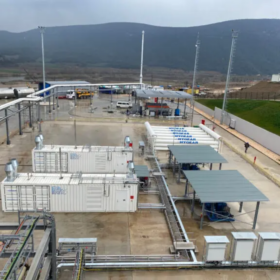
The Hydrogen Stream: New US legislation, Turkey’s first green hydrogen plant
Moreover, Landsvirkjun, the National Power Company of Iceland, and the Port of Rotterdam have completed a pre-feasability study about exporting green hydrogen from Iceland to Rotterdam and the Swedish Energy Agency has allocated €30 million to Project Air, an industrial concept to produce methanol from a large variety of recovered end-of-life streams and hydrogen from electrolysis.
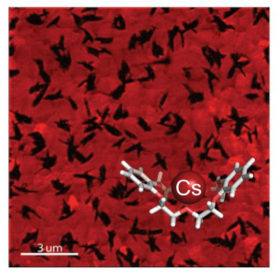
A crowning achievement for perovskite stability
Scientists in Switzerland demonstrated a new type of nanoscale doping for perovskite solar cells. By both improving stability and reducing the chance of the cells leaking any toxic lead into the environment, the discovery addresses two of the largest remaining challenges to the development of the promising class of cell materials.
Solar 101: The brains behind the beauty of your solar power system
In addition to converting the output of PV panels from DC to AC, inverters now perform a number of other functions, such as maximizing electricity generation, assessing performance and even shutting down in emergencies.
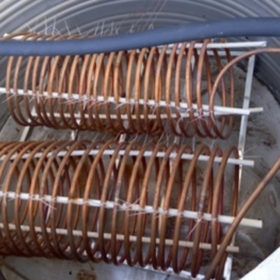
PV-driven air conditioner coupled with ice thermal storage
Researchers in China have built a PV-powered air conditioner that can store power through ice thermal storage. The performance of the system was evaluated considering operating efficiency and stability and the scientists found that a device relying on a variable-speed compressor and an MPPT controller showed very good ice-making capability.
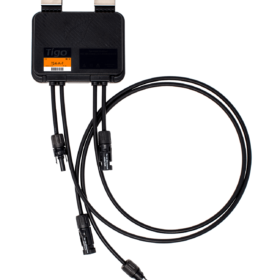
Tigo unveils rapid shutdown device for high-power solar modules
Called Tigo TS4-A-F RSD, the device can operate with a maximum current of 15 A and a maximum voltage of 90 V. It measures 138.4 x 139.7 x 22.9mm and weighs 490g.

Climate district relying on solar-powered hydrogen in Germany
A 1 MW electrolyzer in the middle of a residential area in Esslingen, southern Germany, is intended to significantly reduce the carbon footprint of its residents. One of the energy sources used in the project is rooftop PV located in the area.
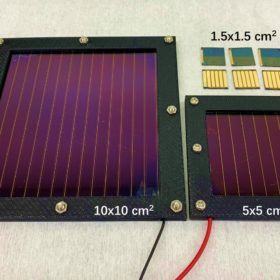
New perovskite material for 23.5%-efficient solar cell
Researchers in Japan have found a new way to fabricate one of the most promising perovskite materials for PV application — the α-formamidinium lead iodide known as α-FAPbI3. With a pre-synthesized version of this material, they were able to produce a cell with a power conversion efficiency of 23.5% and a lifespan of more than 2,000 hours.
