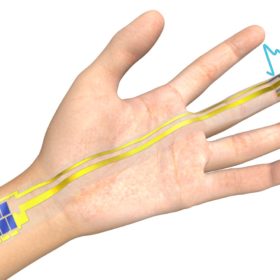
I’ve got solar over my skin
Researchers in Japan have built a PV-powered device to measure volumetric variations in blood circulation. The system, which is just a few microns thick, was built with an organic solar module, a polymer light-emitting diode (PLED), and an organic photodetector.

5N Plus enters space solar cell business with acquisition of Azur Space
The purchase price should range between €73 million and €79 million. Azur Space produces triple-junction space solar cells with an average efficiency of up to 30% and is planning to develop ultra-thin solar cells with up to 35%.
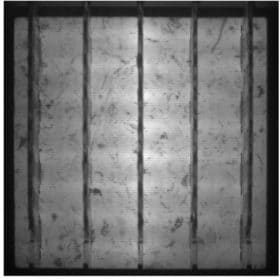
Low outdoor degradation for 20.76%-efficient solar cells made of UMG silicon
Spanish manufacturer Aurinka has tested the degradation rate of its 20.76%-efficient solar cells made of 100% upgraded metallurgical grade (UMG) silicon and has found it shows the same values as conventional polysilicon. The company is currently building a UMG factory in northern Spain.
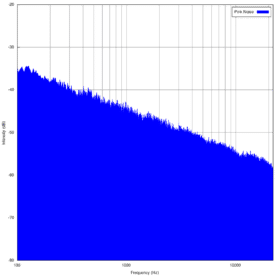
Noise-based technique to test crystalline silicon solar cells
The proposed technique is said to be able to connect directly to the microscopic and medium scale defects in the solar cell materials. It is based on three kinds of noises that science has thus far been able to identify in PV devices.

Fraunhofer ISE develops front/back solar cell with 26.0% efficiency
The cell showed open-circuit voltage values of up to 732 mV. It was fabricated with a back junction (BJ) design with a full-area p-n-junction at the back surface.
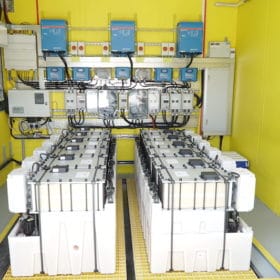
Australian vanadium companies unveil new flow-battery strategies
Australian Vanadium filed a patent application this week for its vanadium processing route, while rival TNG signed a deal to commercialize vanadium redox flow batteries.
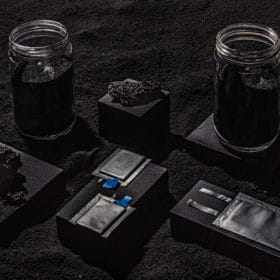
Silicon for batteries moves to commercial production
U.S. company Group14 Technologies today announced the launch of a factory capable of producing 120 tons per year of its innovative silicon-carbon-based anode material for lithium-ion batteries. The factory is located at Group14’s headquarters in Woodinville, Washington and is the first of several planned by the company.

The Hydrogen Stream: EU launches call for low-carbon hydrogen tech, Netherlands unveils €338m plan
Furthermore, Michelin said it wants to become a world leader in hydrogen fuel cell systems and ScottishPower aims to build a green hydrogen plant at a wind power complex. Moreover, a study led by scientists at the U.S. Department of Energy’s (DOE) Argonne National Laboratory suggested new strategies to design perovskite materials to speed up the oxygen evolution reaction (OER), a process that frees up molecular oxygen from water and is key for hydrogen production.
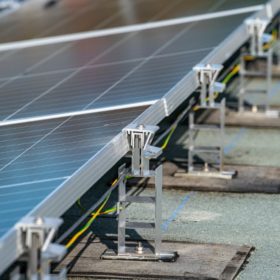
French company unveils new rooftop PV mounting method
Axter, a French waterproofing specialist, has revealed a new mounting process for the installation of rigid solar modules on several types of buildings, including concrete, metal, and wood surfaces.

Solar may cover 75% of global electricity demand by 2050
A new study from the Lappeenranta University of Technology predicts solar may even achieve a 69% share for total primary energy supply by the end of the first half of the century. In terms of price, solar PV is expected to achieve a capex of €246/kW-installed for utility scale projects, and of €537/kW for residential arrays by 2050. The levelized cost of energy (LCOE), however, is expected to remain constant over the next three decades, as the energy transition will also be implemented with storage technologies, increased flexibility and the production of synthetic fuels.
