
TCO-free heterojunction silicon solar cell with 22% efficiency
The cell was built with a phosphorus-doped n-type Czochralski (Cz) silicon wafer with a resistivity of 1.09Ωcm and a thickness of 170mm. Ti/Au/Ag metal stacks were used for the contact with the hydrogenated amorphous silicon (a-Si:H) layers.
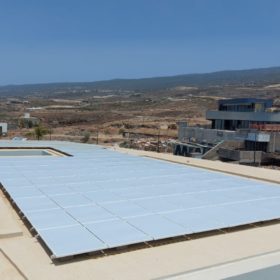
The panel in white
Slovenian solar module manufacturer Bisol has developed a white panel with a power output of 190 W. The product is claimed to be an ideal solution for seamlessly blending with large surface buildings and maintaining their historic character.
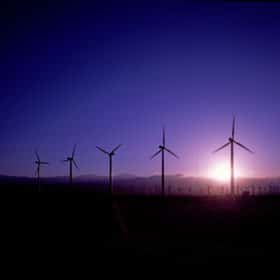
Hybrid wind-solar could make green ammonia cost-competitive in niche markets by 2030
According to a new study from the LUT University, hybrid wind-solar plants offer the ideal profile to reduce the costs of green ammonia. Although natural gas will be able to provide lower prices over this and the next decade, beyond 2040 ammonia generated by wind and solar may reach a price of between €300 and €330 per ton.
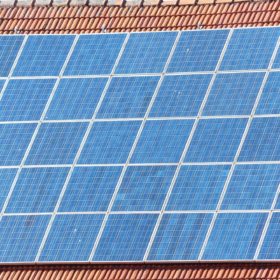
Optimization model to combine residential PV with hybrid hydrogen storage
German scientists have outlined a model to combine hydrogen storage with conventional battery storage in high-efficient energy buildings powered uniquely by photovoltaics. In the proposed configuration, the DC power of the PV system is connected directly to the hybrid hydrogen system, a lithium-ion battery, an electric water heater, and an inverter, which in turn would provide AC current to the household and a heat pump.
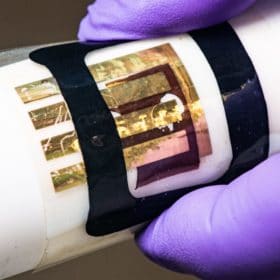
US scientists gain an atom-level view into perovskite cell efficiency
Using Department of Energy laboratories, scientists learned at the atomic level that a liquid-like motion in perovskites may explain how they efficiently produce electric currents.
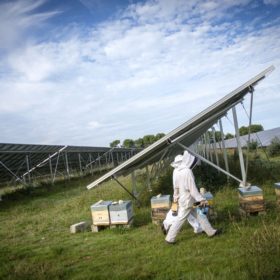
Beekeeping at existing solar parks in France
Engie Green has joined forces with the associations France Nature Environnement and Apicluster to install beehives at several of its solar PV parks in the Provence-Alpes-Côte d´Azur region, in southern France.
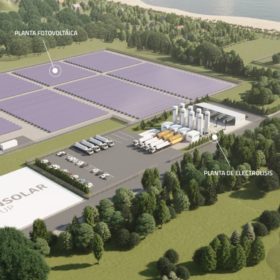
Solar-plus-storage to produce hydrogen from seawater
Spanish PV project developer Gransolar is planning to build a large-scale green hydrogen production plant in the Port of Almería, in southern Spain.
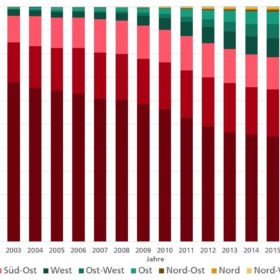
Growing interest for PV arrays with eastern and western orientation in Germany
A report from Fraunhofer ISE reveals that the share of PV systems with southern orientation has decreased from 61% in 2000 to 42% in 2019. It also highlights that solar rooftop installations with a tilted angle lower than 20 degrees have increased from just 5% in 2000 to 24% in 2019.
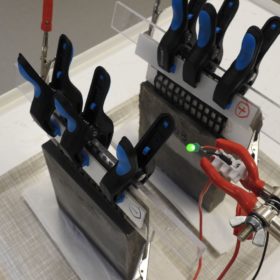
Concrete battery for applications in buildings, rooftop PV
A prototype of a cement-based battery has been developed in Sweden for potential applications in buildings. Its creators claim it could become a solution to store electricity from rooftop PV and they do not exclude that it could also be used for the storage of large-scale renewables.
The Hydrogen Stream: Ørsted kicks off first project, ArcelorMittal moves towards blue hydrogen
A Greek consortium is also planning to invest €8 billion in the domestic production of hydrogen and the French city of Dijon is launching a €100 million euro green hydrogen project to reduce the CO2 emissions of the territory’s public transport starting in 2023.
