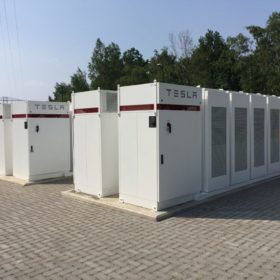
Novel salt solution for lithium-ion battery fires
Australian researchers have tested a novel lithium salt for high-voltage lithium batteries in electric vehicles and grid-scale storage systems. They claim the salt is less hazardous than conventional battery materials.

The Hydrogen Stream: big push from UK, European Union
U.K. business and energy secretary Kwasi Kwarteng has unveiled a new hydrogen strategy aiming at developing both the green and blue forms of the fuel. Furthermore, Thierry Breton, the EU commissioner for the internal market, has said Europe needs to increase its commitment to hydrogen and use nuclear to produce a decarbonized form of the gas.
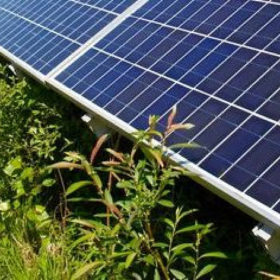
Cooling PV modules with plants, coir pith
An Indian-Malaysian research group has investigated the effectiveness of several passive cooling techniques for solar panels, including the placement of plants around the modules or coir pith underneath them, both of which, surprisingly, offered good performance in terms of temperature reduction and power yield.
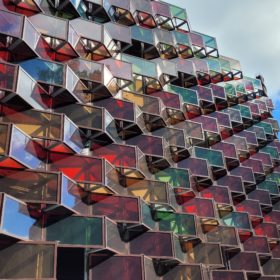
New PV facade design in Sweden
Soltech Energy has installed a 60 kW solar facade on the wall of a garage in Sweden that hosts 300 EV-charging posts. It features a steel structure to facilitate the flow of air.

PV-powered geothermal heat pump system for greenhouses
The PV-powered geothermal heat pump system was tested for a year, with measurements taken by Researchers at the University of Nottingham. The UK group showed it was able to maintain an indoor temperature over 16 Celsius degrees in all seasons, except for winter.
The Hydrogen Stream: New push from Oman, a guide to produce hydrogen from aluminum and more blue hydrogen projects
Oman is expanding its network to become a hydrogen hub and the Massachusetts Institute of Technology (MIT) has published a practical guide for generating hydrogen using scrap aluminum. Furthermore, BP and Mitsui have separately announced more blue hydrogen projects.
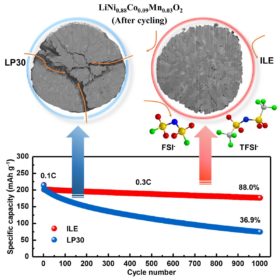
Lithium-metal battery with capacity retention of 88% over 1,000 cycles
German scientists have applied a new combination of cathodes and electrolytes to improve the stability of lithium-metal batteries. They fabricated a device with an energy density of 560 watt-hours per kilogram and a Coulombic efficiency of 99.94%.
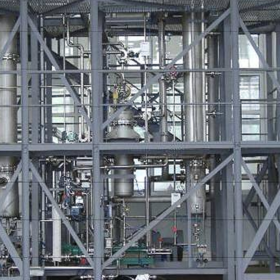
Blue is not the new green
A new study from Stanford University and Cornell University shows that blue hydrogen can produce more greenhouse emissions than heat produced by coal and gas. The modeling classifies blue hydrogen emissions as carbon dioxide and unburned fugitive methane, as well as lifecycle emissions linked to the mining, transport, storage, and use of methane.
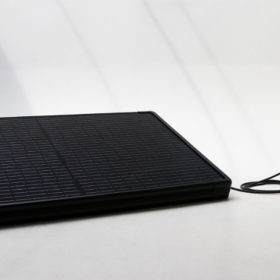
Plug-and-play solar module from the Netherlands
Supersola has developed a 315 W, half-cut monocrystalline PV module. It costs €699 and can be coupled with other two panels to form a 1 kW residential PV system.

AI-powered bidding platform for Australia’s biggest solar farm
The operators of Australia’s largest solar farm have turned to a software-based bidding solution as they seek to optimize dispatch and manage the facility’s market trading and power purchase commitments amid increasing market volatility.
