
‘Garbage in, garbage out’ – solar industry debates reality of AI
Artificial intelligence can accelerate the planning, construction, and operation of photovoltaic systems, as shown at the recent Solar Quality Summit in Barcelona, Spain. But its effectiveness depends on data quality, as poor data, unclear responsibilities, and weak documentation can become major cost drivers.
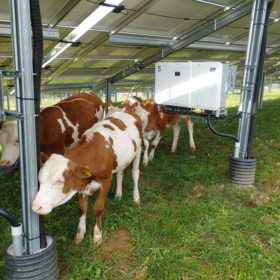
How to protect animals from lightning in agrivoltaics
Researchers in Germany assessed lightning risks in livestock-integrated agrivoltaic systems, identifying key injury mechanisms and establishing safe step and touch voltage limits. Their simulations showed edge strikes and conductive structures pose the highest hazards, highlighting the need for livestock-specific earthing designs and mitigation strategies.
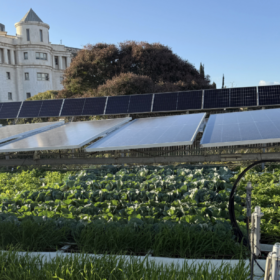
Israel approves rules for agrivoltaics
A zoning masterplan for agrivoltaics in Israel specifies solar panel coverage must not exceed 30% of the cultivated area. The lower edge of panels must be at least 1.5 m above the ground for field crops, increasing to 4.5 meters for orchards and other crops.

When hail hits PV: New research maps damage, testing, and mitigation
A new review examines the impact of large hail on PV systems, covering damage, testing methods, and mitigation strategies. Researchers highlight risks across Europe and the U.S. and explore ways to improve module resilience.
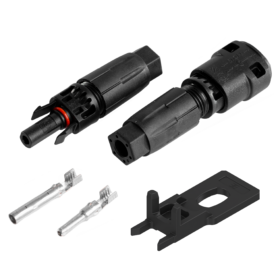
Weidmuller USA launches PV connectors rated for 1,500 V
Weidmuller USA has launched the WM4 C PV Connectors, designed for residential, commercial, and utility-scale solar systems. The connectors support up to 1,500 V, feature crimp contacts, an anti-tampering lock, and IP67 protection.

Solar module prices rise faster than expected in February
Solar module prices increased by €0.01 ($ 0.012)/W to €0.015/W in February, lifting levels 15% to 18% above the December 2024 low despite falling wafer costs, as manufacturers seek to restore margins after prolonged losses.
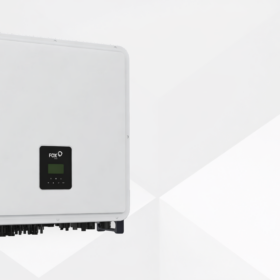
Fox ESS releases hybrid inverters for commercial PV
The inverters offer up to 99.2% efficiency, 200% PV oversizing, dual battery inputs, IP65 protection, and support for installations up to 144 kWh of storage capacity.
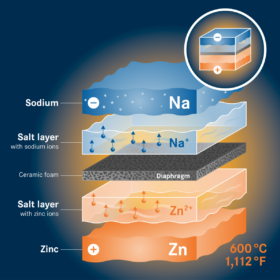
High-temp sodium-zinc batteries reveal causes of rapid capacity loss
Helmholtz-Zentrum Dresden-Rossendorf (HZDR) researchers have used operando X-ray imaging to reveal why sodium-zinc molten-salt batteries, operating at around 600 C and promising for stationary energy storage due to low-cost, abundant materials, experience persistent capacity loss.
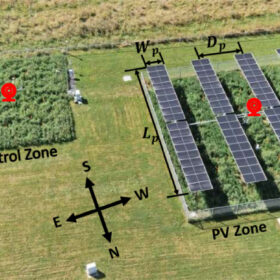
How airflow modifications in agrivoltaics affect crop yield, energy output
New research from France shows that PV panel height critically influences airflow and evapotranspiration in agrivoltaic systems, with panel heights of less than 3 m affecting crops through altered airflow. The scientists highlighted the need for site-specific measurements and computational fluid dynamics to accurately estimate water and energy exchanges beneath PV panels.
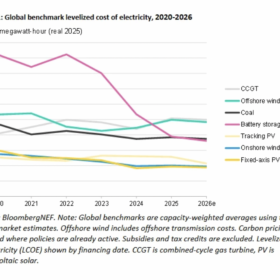
Solar LCOE to fall 30% by 2035, says BloombergNEF
Analysis from BloombergNEF finds the levelized cost of electricity (LCOE) of a typical fixed-axis solar farm increased by 6% year-on-year in 2025 to stand at $39/MWh, but innovation and competition are expected to see costs fall by 30% through to 2035.
