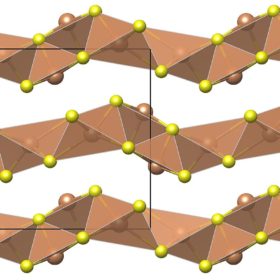
Antimony selenide solar cell with 6.4% efficiency
Scientists in the United States have fabricated a solar cell using antimony selenide films with favorable crystalline properties. They achieved the remarkable conversion efficiency for this early-stage PV material by focusing on the selenization temperature.
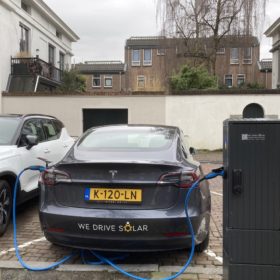
Electric cars to store renewables in the Netherlands
We Drive Solar and Hyundai are planning to set up a network of 500 bi-directional EV recharging stations in the city and region of Utrecht. Through this technology, electric cars may contribute to the storage of renewable energy in a country affected by grid constraints.
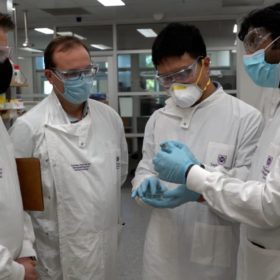
Graphene aluminum ion batteries with ultra-fast charging
The “graphene revolution” is almost here. Australian scientists specializing in aluminum-ion batteries are now working with Brisbane-based Graphene Manufacturing Group to commercialize a technology that could transform energy storage.
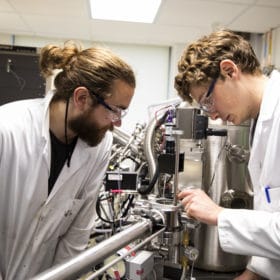
Cracking the case for solid state batteries
Scientists in the UK used the latest imaging techniques to visualize and understand the process of dendrite formation and electrolyte cracking in an all solid-state battery. With new insight into the mechanisms by which these cracks form and ultimately lead to battery failure, the results could help direct the focus of future research into solid-state battery technology.

Excess PV power to activate floor heating in commercial buildings
Austrian heat and PV specialist my-PV is proposing a new solution to use surplus PV electricity for thermal concrete-core activation in commercial buildings.
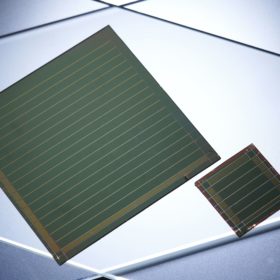
Large-area perovskite solar module with 18% efficiency
Researchers in Germany claim to have overcome the main challenge for the development of large-area perovskite PV modules – scaling up from the cell to the module level. They achieved an efficiency of up to 16.6% on a module surface of more than 50 centimeters squared, and 18% on a module with an area of 4 centimeters squared.

Enabling aluminum in batteries
Scientists in South Korea and the UK demonstrated a new cathode material for an aluminum-ion battery, which achieved impressive results in both specific capacity and cycle life. The material allows researchers to better take advantage of aluminum’s energy storage characteristics, and produce batteries with much higher capacity.

The Hydrogen Stream: Offshore hydrogen pipeline and more electrolysis capacity in Germany
Big German conglomerates such as Siemens, RWE and Vattenfall keep pushing for green hydrogen development through different projects. Germany’s first offshore hydrogen pipeline is being planned by RWE itself, Shell, Gascade and Gasunie, and should be commissioned in 2035. Siemens is planning hydrogen projects in the 5 MW to 50 MW range, for industrial and mobility applications.
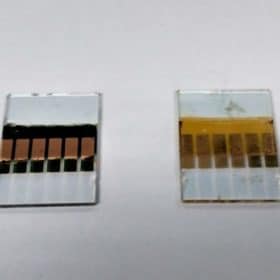
Solid-state solar cells based on metal-organic framework nanomaterials
Spanish scientists have fabricated solid-state PV cells with two different porous nanomaterials. Although low in terms of efficiency, one of the cells built with the MIL-125(Ti) metal-organic framework nanomaterial exhibited better photovoltaic performance than similar devices.

Silicon carbide passivating contact for 24%-efficient crystalline solar cells
The special passivating contact is claimed to feature high transparency, good conductivity, and at the same time, to offer enough hydrogenation for passivation. The cell built with this contact achieved an open-circuit voltage of 725 mV, a short-circuit current density of 40.87 mA cm−2, and a fill factor of 80.9%. Its certified efficiency was 23.99%.
