The Hydrogen Stream: 20 MW electrolyzer in Spain, hydrogen alliance between Russia and Germany
BP, Iberdrola and Enagás will power a 20 MW electrolyzer with 40 MW of solar in Spain. Automotive manufacturers Hyundai, Stellantis, Toyota and BMW sent a letter to European Commission Vice-President Frans Timmermans asking to support the continued expansion of a 700 bar hydrogen refuelling network in Europe.
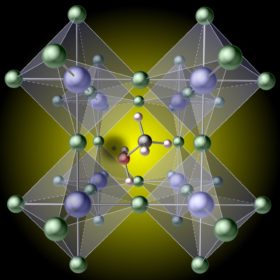
Keeping track of hydrogen for perovskite performance
Scientists in the United States discovered that hydrogen plays a leading role in the formation of defects in a perovskite film, which limit their performance as PV devices. The discovery, according to the researchers, offers further insight into observations already established by trial and error and could help to push the impressive efficiency achievements already made by perovskites even higher.
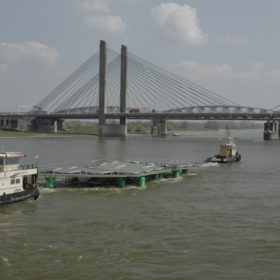
Offshore floating PV platform unveiled in the Netherlands
Dutch floating structure specialist Solarduck has built a pilot 65 kW floating PV array that will be connected to a 10 kW electrolyzer to produce hydrogen bonded with a liquid organic hydrogen carrier. The system is relying on the company’s proprietary floating technology that resembles an offshore oil platform.
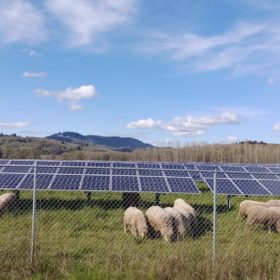
Agrivoltaics increases land productivity, improves animal welfare
New research from the United States has shown the numerous advantages of combining lamb grazing with solar power production. The researchers found, in particular, that the overall return from grazing was the same in both solar pastures and open pasture fields with no PV panels.
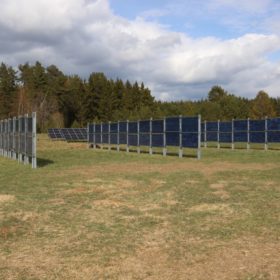
Optimization algorithm for vertical agrivoltaics
Developed by Swedish scientists, the proposed algorithm is said to calculate a project’s ideal design by combining climatological data with figures on expected solar power generation, shading distribution, water for irrigation, and agricultural yield. Its creators spoke with pv magazine about the key parameters that the model seeks to determine, one of which is the optimal distance between the solar module rows depending on the kind of crop.
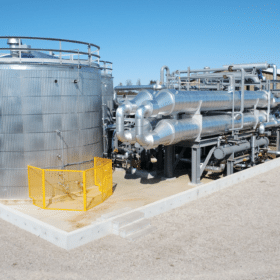
California to host 1 GW of compressed air storage
Two projects in California will fill part of the 1,600 MW of long-duration energy storage that state regulators have said is needed by 2026.
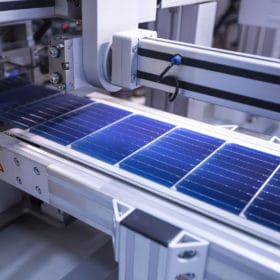
ITRPV: Large formats are here to stay
The 2021 edition of the International Technology Roadmap for Photovoltaics (ITRPV) was published today by German engineering association VDMA. The report, which forecasts technology trends across the solar industry, expects PERC to maintain its position as the dominant cell technology and notes that large wafer formats are here to stay.
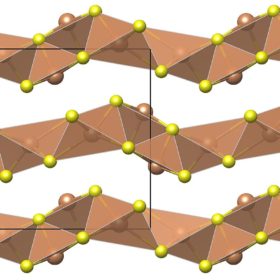
Antimony selenide solar cell with 6.4% efficiency
Scientists in the United States have fabricated a solar cell using antimony selenide films with favorable crystalline properties. They achieved the remarkable conversion efficiency for this early-stage PV material by focusing on the selenization temperature.
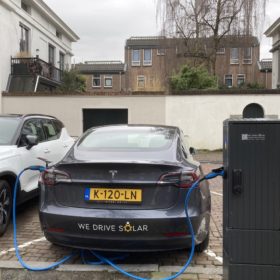
Electric cars to store renewables in the Netherlands
We Drive Solar and Hyundai are planning to set up a network of 500 bi-directional EV recharging stations in the city and region of Utrecht. Through this technology, electric cars may contribute to the storage of renewable energy in a country affected by grid constraints.
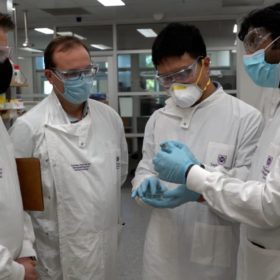
Graphene aluminum ion batteries with ultra-fast charging
The “graphene revolution” is almost here. Australian scientists specializing in aluminum-ion batteries are now working with Brisbane-based Graphene Manufacturing Group to commercialize a technology that could transform energy storage.
