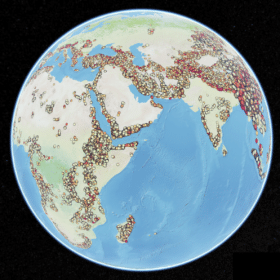
Sustainable pumped-hydro across 616,818 sites
Australian researchers have identified more than 600,000 sites suitable for closed-loop pumped-hydro energy storage projects across the globe. “Off-river” pumped-hydro is not only able to overcome the typical topographical issues of conventional pumped-hydro but is also cheaper.

Agrivoltaics prevail in France’s tender for innovative PV technologies
The French energy regulator has allocated 146.2 MW in the procurement exercise. The final average price was €0.0815/kWh.
Enhancing electron transfer kinetics crucial for viability of redox flow batteries
Scientists in the United States claim that further research is needed to gain a deeper understanding of kinetic stabilization strategies to increase cell voltage in redox flow batteries and bring them closer to commercial viability.
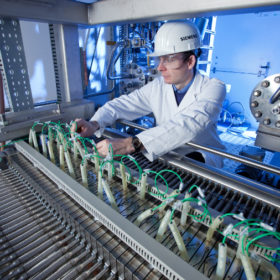
PV trends of 2020: Part 5
Despite much of the world being on lockdown for a big chunk of 2020, there are few who could say it has been an uneventful year. And while the ongoing Covid-19 pandemic will be what defines 2020 for many, in the solar industry there’s plenty more to shout about, from the rapid rollout of high-powered modules to a drastic increase in carbon-neutral pledges from companies and governments around the world. Across five installments, pv magazine takes a look back at the year in solar. First up were the U.S. election and carbon neutral pledges, followed by auctions and green bonds. Part 3 focused on big modules and renewable grid support, while part 4 looked at high-efficiency EU cell production and perovskites. In the final installment, you can read about smart homes and green hydrogen.
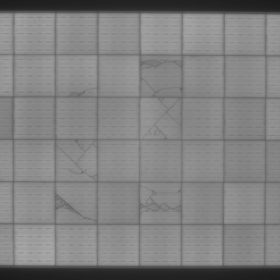
Looking into the cracks
A white paper published earlier in December by PV Evolution Labs investigates the formation of performance damaging cracks in PV cells, based on mechanical stress testing of more than 40 commercially available PV modules. While the lab warns that susceptibility to cracking will change according to the specific bill of materials making up each module, certain technologies are shown to perform better than others.
The ideal size for a quantum dot
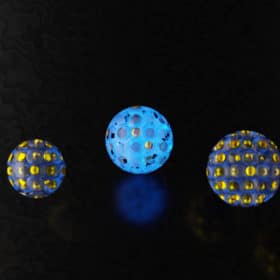
Scientists in Australia have developed an algorithm to calculate the perfect size and density for a quantum dot as a light sensitizer in a solar cell. The research could lead to both higher efficiencies for quantum dot solar cells, and the design of quantum dots compatible with other cell materials, including crystalline silicon.

Assessing PV performance in zero-energy building
A Brazilian research team has shown the advantages of linking solar-powered zero-energy buildings to recharging stations for electric vehicles. It proposed a model that can be applied to any location.

New model to deploy cheaper PV at coal power plants
Researchers have assessed how much solar may be deployed on the rooftops and coal storage sheds in coal power plants in China and they have found potential for around 4 GW.
Artificial intelligence in photovoltaic production
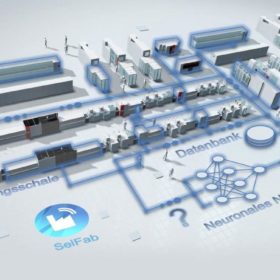
Five scientific institutions in Germany are currently working together on self-learning production plants that use process data for the permanent optimization of manufacturing. The initiative is aimed at making the settlement of photovoltaic factories in Germany and Europe attractive again.
New approach to III-V tandems sets 32.9% efficiency record
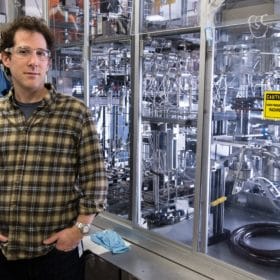
A collaboration between the U.S. National Renewable Energy Laboratory and Australia’s University of New South Wales has yielded a new efficiency record of 32.9% for a tandem cell device utilizing III-V materials. Key to the achievement was a new technique enabling the researchers to take advantage of “quantum wells” in the material that serve to trap charges and enable tuning of the cell bandgap to absorb more of the light spectrum.
