
Hybrid wind-solar may have a shading problem
Scientists in the Netherlands are seeking to assess how hybrid wind-solar projects may be impacted by the shade produced by the wind tower and wind turbine blades on the PV facility. According to them, the slow movement of the wind unit’s shadow can be easily incorporated into project design.
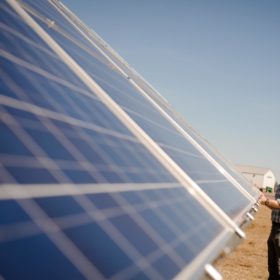
US scientists claim PV system owners subsidize their non-PV neighbors
Researchers at the Michigan Technological University claim to have demonstrated that PV system owners in the United Stated are unjustly subsidizing electric utilities. Their analysis showed that, thanks to rooftop PV, utilities and their non-PV customers can save money from avoided costs for new grid, reserve, and generation capacity, as well as for avoided operation and maintenance and environmental and health liabilities due to fossil fuel power generation.
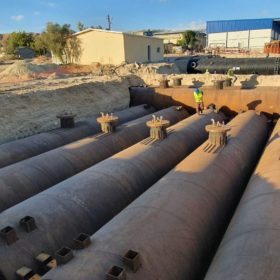
Augwind’s compressed air tech for renewables storage
Augwind CEO Or Yogev recently spoke to pv magazine about the Israeli company’s new storage solution for the renewables sector. The underground compressed-air storage specialist recently secured 166 MWh of capacity in Israel’s latest solar+storage tender, and plans to take equity stakes in all five projects.

Excess renewables production to make fuel, chemicals and feedstocks for industry
The University of New South Wales and several other universities in Australia are embarking on a feasibility study into how New South Wales can utilize excess renewable energy to make fuel, chemicals, and feedstocks for the industry. The aim is to develop a plan for how fuels and chemicals such as green hydrogen and ammonia produced from renewables can decarbonize the industry.
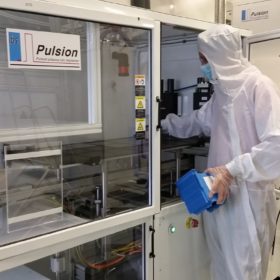
Indium-free passivated solar cell with 22.4% efficiency
French research institute Liten has built the device with a new cell architecture that combines ultra-thin polycrystalline silicon layers with films of passivated transparent conductive oxide (TCO) contacts.

Mobile laboratory for PV module testing
MBJ Solutions and TÜV Rheinland have jointly developed PV TravelLab, which is purportedly the world’s first portable laboratory for PV module tests. It can be used to assess solar panels at any location in the world.
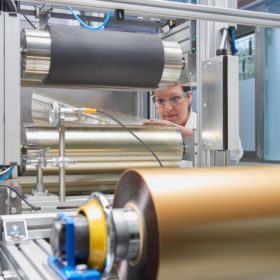
Pure Hydrogen to develop large-scale facility in Australia
Real Energy, an oil and gas developer, continues to pursue its hydrogen ambitions. It recently entered into a key partnership with Port Anthony Renewables to build and develop a large-scale hydrogen production facility in the Australian state of Victoria.
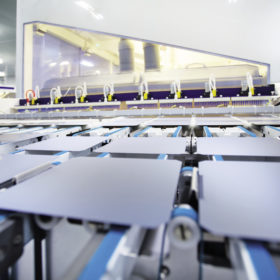
Chinese PV Industry Brief: Increasing wafer prices and new glass and polysilicon orders
Zhonghuan and Longi raised the prices of their wafers before the Chinese New Year holiday. Longi also secured more polysilicon and glass through two different orders, with OCI Group and Flat Glass, respectively.

Novel algorithm for integrating solar, wind, hydrogen
A new, nature-inspired algorithm has been applied by scientists in Egypt and Saudi Arabia to optimize the production of green hydrogen via solar and wind power generation. The proposed energy system consists of PV and wind power generation, a water electrolyzer, a tank of hydrogen gas, a fuel cell, and an inverter that brings the generated electricity to final consumers.
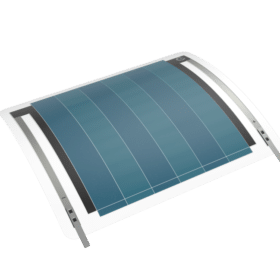
Mini organic solar module for indoor low-power applications
Under typical indoor illumination of around 500 lux, from light sources such as LED or fluorescent light, the device’s power conversion efficiency is just below 15%. The largest device has an open-circuit voltage of 3.8 V, a short-circuit current of 146 μA, and an output power of 418 μW. The product can also be used in conjunction with capacitors to replace batteries or to prolong their lifetime in low-power applications.
