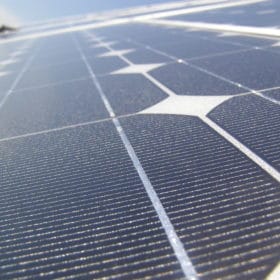
US government wants to cut solar costs by 60% in 10 years
The US Energy Department set a goal of achieving 2 cents/kWh by 2030, and announced an initial $128 million in funding to support technology development.
The Hydrogen Stream: Siemens targets $1.50/kg by 2025, BP and Saudi Aramco bet on blue hydrogen
The German company expects to roll out its in-house proton exchange membrane (PEM) electrolysis technology to implement a gigawatt production of electrolyzers. BP partners with UK gas distributor Northern Gas Networks (NGN) to develop blue hydrogen and Saudi Aramco teams up with Hyundai Heavy Industries to do the same. Italy’s Snam wants to build hydrogen projects in the United Arab Emirates.
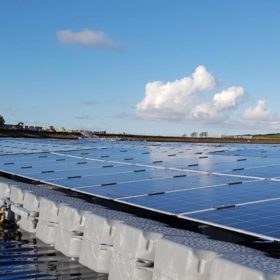
How much floating PV is enough?
Scientists in the UK have had a closer look at the impacts of floating PV systems on the water. They found that their cooling effect on water mitigates blooms of toxic blue-green algae and increased water evaporation, which are both caused by global warming. They also warned, however, that colder water may result in a reduction of the duration of so-called thermal stratification. The right proportion between the surface occupied by the PV array and a water surface’s total area is key for addressing this issue.
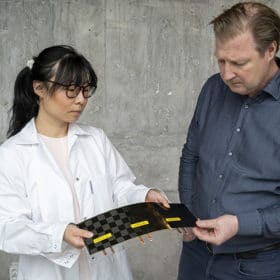
‘Massless’ battery breakthrough for lightweight EVs
A new type of carbon fiber and electrolyte matrix stunned scientists when they tested its properties. Their ‘structural’ battery could be used in electric vehicles and could even address the weight problems that bedevil devices planned for electric-powered flight.
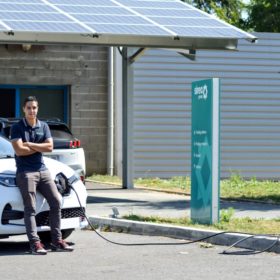
EV recharging station powered by solar, hydrogen
The recharging station was designed by French automation group Sirea. It is powered by a solar carport and a small electrolyzer.
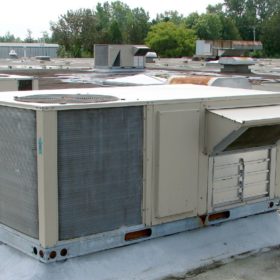
Cooling PV panels with HVAC system exhaust
A French-Lebanese research group has proposed a way to cool down PV modules by using air exhausted from heating, ventilation, and air conditioning (HVAC) systems. They showed that array performance improves when the cooling load rises.

Polyelectrolyte-based inverted perovskite solar cell with 20.29% efficiency
Taiwanese researchers have added bathocuproine (BCP) molecules to three different kinds of solvents used in perovskite cells and have ascertained how this combination increases the carrier mobility and passivates the electron-poor defects. Furthermore, they utilized a polyelectrolyte (P3CT-Na) thin film as hole transporting material instead of commonly-used thin films based on PEDOT:PSS.
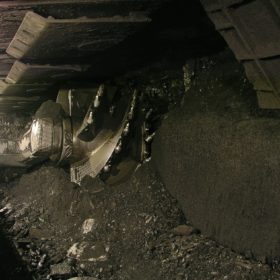
China’s ‘quasi-monopolistic’ stranglehold on solar noted by EU body
The bloc should accelerate investment into mining and processing within its shores, as well as ramping up recycling, according to European employers and trades unions, with coal workers already equipped with the necessary transferable skills.
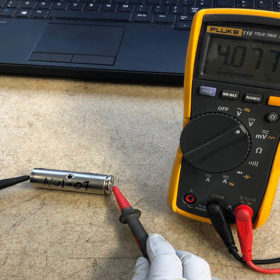
Polymer current collectors could prevent battery fires
A team of NREL researchers has proposed a new approach to fix lithium-ion batteries’ fire problem. The answer may lie in temperature-sensitive current collectors.

Guide to help installers detect hidden costs in high-power modules
Spanish PV product distributor Techno Sun has published a report analyzing the consequences of high-power modules for installers and distributors. The guide provides a method to calculate the additional costs of large solar panels from different points of view.
