
Over-irradiance events affect utility scale PV components
Researchers are seeking to understand the extent to which sudden spikes in irradiance can affect solar power plants. The preliminary findings indicate large scale PV projects are not immune to such events, especially when the spikes last longer than a minute.

Fraunhofer ISE develops organic solar cell with 14.9% efficiency
The record was obtained with a 1.1 sq cm device.
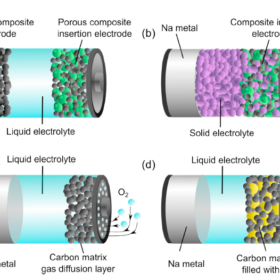
An optimistic – but realistic – perspective for sodium batteries
International researchers have analyzed the potential of sodium-based energy storage and found recent technical advances have arrived faster than those for the lithium-ion batteries which have been studied for three decades. Issues remain, however, before sodium constitutes a complementary option to lithium.
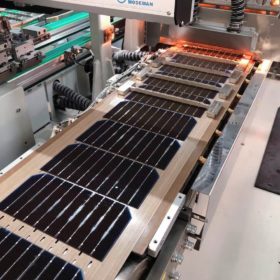
Half-cut, bifacial, 20.5%-efficient PERC modules from Vietnam
Chinese solar manufacturer Dehui is planning mass production of 12-busbar bifacial panels based on 182mm wafers from next year.

Perovskite solar cell based on metal-organic framework with 22.02% efficiency
Scientists in Hong Kong have developed a cell they say retains more than 90% of its initial efficiency under accelerated testing conditions. The device is based on two-dimensional metal-organic frameworks.
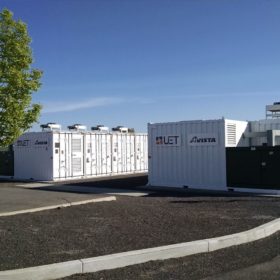
Best membrane for vanadium redox flow batteries
A new research paper looks at the membranes used for applications in vanadium redox flow batteries. It outlines various membrane technologies and the obstacles to bringing batteries to mass production.

Simplified modeling for partially shaded PV systems
A proposed two-diode model is based exclusively on the standard test condition parameters of solar modules and their irradiance levels. The analytical tool reportedly enables PV system operators to estimate the I-V curves of a shaded array quickly and accurately.
Probabilistic model indicates PV module warranty reliability
U.S.-Spanish researchers have proposed a new way to assess the reliability of PV modules and their warranties. It is impossible to fulfill a 25-year warranty if the threshold of returned modules exceeds 5% and the annual degradation rate is over 0.73%.

Australian-designed storage system spells grid independence
“We’ve put together the best components to make a unique Australian-designed solution that is compliant to the new battery standards,” says EVO Power Managing Director Jamie Allen. Offgrid or upmarket – just add solar.
Power-to-hydrogen for multi-energy systems
Scientists in Switzerland say power-to-hydrogen is particularly promising for coupling electricity and heating and offsetting seasonal variation in renewables generation in sector-coupled energy networks. Their analysis indicated the technology may be especially useful in areas with a high ratio of seasonal thermal-to-electric demand.
