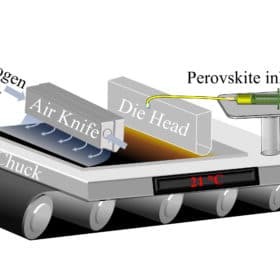
Slot die coating for 20.83% efficient perovskite thin-film solar cell
Scientists in Germany demonstrated a slot die coating process for large-scale production of perovskite thin-film solar cells that achieved a maximum efficiency of 20.83%. Using an additive, and experimenting to find the optimal concentration, the group demonstrated improved control over the crystallization process – crucial for developing stable, repeatable processing.
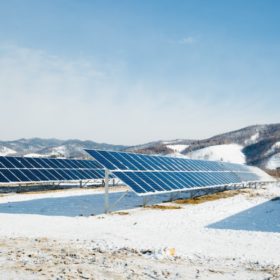
New parameters to improve prediction models for snow cover
Canadian scientists have developed a way to improve the short-term models used to forecast the impact of snow on PV arrays. The parameters include the warming effect of irradiance on the backs of panels, thermal capacity, and irradiance through snow.
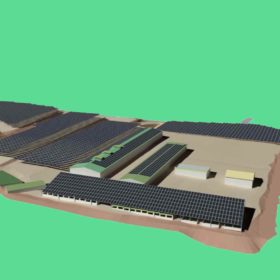
When agrivoltaics meet energy communities
Spain’s Tranesol is setting up two energy communities that will be powered by 2.5 MW of agrivoltaics. The two facilities will be located in the Valencian Community, which is at the forefront for supporting projects for solar power sharing.
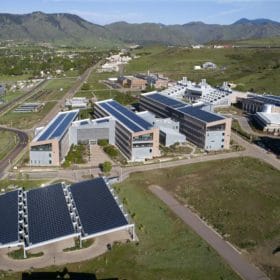
Raising the temperature on module standards
Scientists in the U.S. laid out the rationale behind new PV module testing specifications published last year, which aim to better take into account the role of temperature in various types of performance loss. They suggest a new ‘98th percentile’ approach to measuring module operating temperatures, which would offer system designers a better understanding of the module’s performance in a particular ‘micro-environment’.

Australian startup aims to become one of the first first Li-ion anode producer outside China
A handful of companies are challenging Chinese control of a core material in lithium-ion battery production, before the electrification of transport truly kicks off the global battery boom. International Graphite, a Perth-based startup at the forefront of this effort, recently spoke to pv magazine Australia about the surprisingly collaborative race to feed global demand.

Modular lift system for solar panels
Altrex, a scaffolding and ladder producer in the Netherlands, has developed a new modular lift solution for solar panels. The system can raise one solar panel at a time and can be operated by a single installer using nothing other than a cordless drill, the company claims.
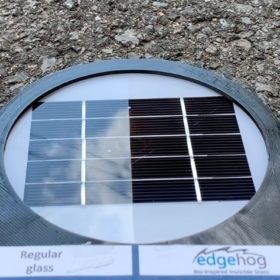
Canadian start-up secures US$2.5 million to launch omnidirectional anti-reflective glass
Edgehog secured the funds from Sustainable Development Technology Canada (SDTC). The special glass is hydrophobic and is claimed to be able to reduce the accumulation of dust and residue, thus reducing the need for maintenance.
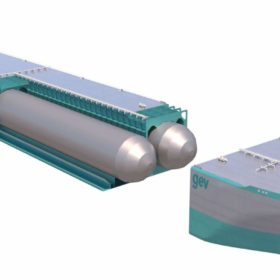
Australian green hydrogen vessel deemed ‘highly competitive’
A scoping study has found that Global Energy Ventures’ compressed hydrogen ship is technically feasible and ‘highly competitive’ to transport the hyped future fuel at distances that conveniently connect Australia to Asian markets.
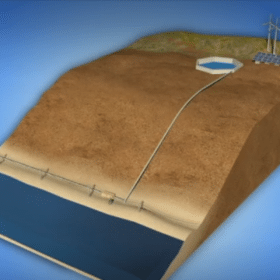
Pumped hydro with desalination, powered by renewables
EDF and Oceanus plan to build a pumped hydro storage station and a desalination system powered by wind and solar. The system will use saltwater to produce hydropower during periods of high demand, while producing affordable freshwater.
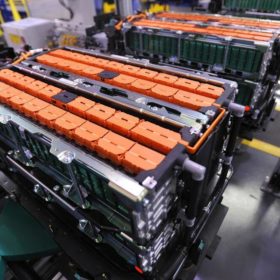
Novel nanomaterial to replace graphite in lithium-ion batteries
Porous nanostructured microspheres made of copper, iron, and iron oxide were used by an international research team as negative anode material in lithium-ion batteries. The new technique is claimed to provide three times more capacity than batteries based on graphite anodes.
