
New pathways for tin-monosulfide PV
Scientists in Japan have developed a new process for the fabrication of crystalline tin monosulfide (SnS). By facilitating the growth of crystals measuring up to 24mm in diameter, the process could help overcome some of the challenges to squeezing higher efficiencies out of this cheap, abundant material.
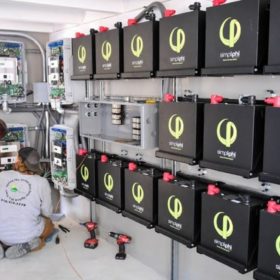
Simpliphi predicts cobalt-free battery takeover sooner than expected
pv magazine spoke with Catherine Von Burg, CEO of the Californian battery company, to discuss why she believes lithium-iron-phosphate is the chemistry of the near future.
Daily news round-up: UK reveals details of next renewables auction, Iran’s first floating PV and more hydrogen
Taiwanese cell manufacturer Inventec Solar reportedly halted production this month and Ireland is preparing to remove rooftop solar panel restrictions, according to the Irish Independent.
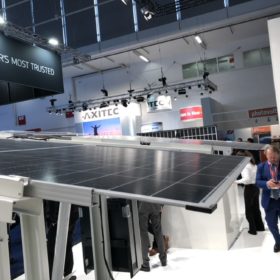
Manufacturing process for mono cast solar cell exceeding 23% efficiency
Trina Solar has made a PV cell by directly applying the unmodified i-TOPCon process, originally developed for Cz mono wafers, to cast n-type quasi-mono silicon wafers. It claims the average efficiency, tested in-house with a calibrated reference cell, is 22.98%.

Solar-powered hydrogen under $2/kg by 2030
Researchers from the Massachusetts Institute of Technology have identified sites where hydrogen could be produced via PV electrolysis at prices ranging from $1.90/kg to $4.20/kg in the United States by the end of the decade.
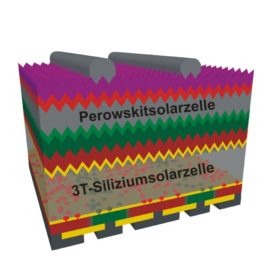
German-led consortium aims for 33% efficient perovskite-silicon solar cell
The Institute for Solar Energy Research Hamelin (ISFH), the Karlsruhe Institute of Technology (KIT) and the Institute for Materials and Components in Electronics at the University of Hannover, as well as Centrotherm, Singulus, Meyer Burger and Von Ardenne are involved in a research project aimed at achieving a 27% conversion efficiency for silicon solar cells based on perovskite.

Degradation and regeneration in polysilicon passivation layers
Scientists in Australia took a close look at the long-term performance of passivation layers in silicon solar cells, and discovered a surprising process of degradation and regeneration at work within the material. The results could have implications on the processes used in industrial scale solar cell production.

Screen-printed heterojunction solar cell with 20.48% efficiency
Researchers from the United States have used new passivated contact architectures to demonstrate a screen-printed silicon heterojunction solar cell on 40 micron thick standalone wafers.
In search of cost-effective techniques for III-V cell production
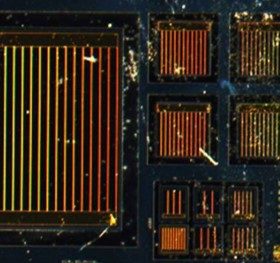
Scientists in Canada have discovered a promising technique for the production of gallium-arsenide solar cells. Growing these cells directly onto a silicon substrate is a promising strategy that could cut out some of the technology’s exorbitant production costs. And by making that silicon porous, scientists may have taken a step toward producing high-performance III-V solar cells at a significantly lower cost.

The steeplechase of transparent PV
A South Korean research team has claimed that transparent PV technologies need to improve in terms of efficiency, stability and aesthetics before they can reach commercial maturity.
