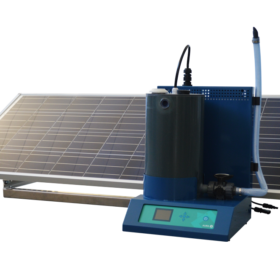
A disinfectant system powered by solar
French PV company Solea has developed a system which can produce 8-16 liters of solar-powered disinfectant solution per day.
Tackling climate change with machine learning: The power of entrepreneurship
The importance of start-ups and climate tech companies in advancing the use of machine learning to combat climate change was emphasized at a recent online workshop.
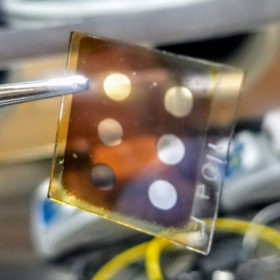
A flexible perovskite solar cell with 11.8% efficiency
U.S. researchers have created an inorganic mixed halide perovskite solar cell which they claim shows no thermal degradation even at 200 degrees Celsius for three days. The device can be used in tandem junction cells and is designed for use in real-life environments with high solar irradiation.

Storing solar and wind energy with compressed air
Researchers have studied the potential of using compressed air to store renewable energy in offshore saline aquifers. The technology could hold 77-96 TWh for up to two months in British waters, although the costs have proven hard to pin down.
A Champagne moment for commercial electric vehicles?
Detroit-based Bollinger Motors’ versatile E-Chassis for electric vehicles could pave the way for a commercial vehicle fleet transition in the U.S. which accelerates the e-mobility revolution.
A perovskite electrode to improve hydrogen production
The material was used by scientists in the U.S. in electrochemical cells which use electricity to separate steam into hydrogen and oxygen. The researchers say the oxide of perovskite used in the electrode improves cell performance and reduces operating temperatures.

Tackling climate change with machine learning: Covid-19 and the energy transition
The effect the coronavirus pandemic is having on energy systems and environmental policy in Europe was discussed at a recent machine learning and climate change workshop, along with the help artificial intelligence can offer to those planning electricity access in Africa.

Wearable ‘honeycomb’ lithium-ion battery
Scientists in South Korea have worked with graphene and carbon nanotubes to develop a working lithium-ion battery that can be stretched by up to 50% without damage to any of the components. According to the scientists, the battery represents a significant step in the development of wearable or body-implantable electronic devices.
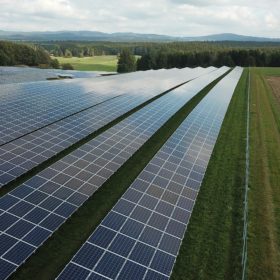
LCOE from large scale PV fell 4% to $50 per megawatt-hour in six months
Analysts at Bloomberg New Energy Finance say the lowest-cost projects financed in Australia, China, Chile and the UAE in the last six months hit a levelized cost of energy of just $23-29/MWh and the best solar and wind projects will produce electricity for less than $20/MWh by 2030.
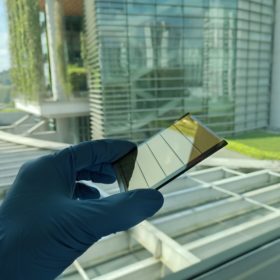
Mini perovskite module with 18.13% efficiency
Scientists from Singapore have developed semi-transparent perovskite solar cells that can be easily integrated into a range of urban contexts, including building facades, gates and windows. The 21cm2 mini panels are made of perovskite solar cells based on methylammonium lead iodine (MAPbI3), with an efficiency of 20.28% for 0.16 cm2.
